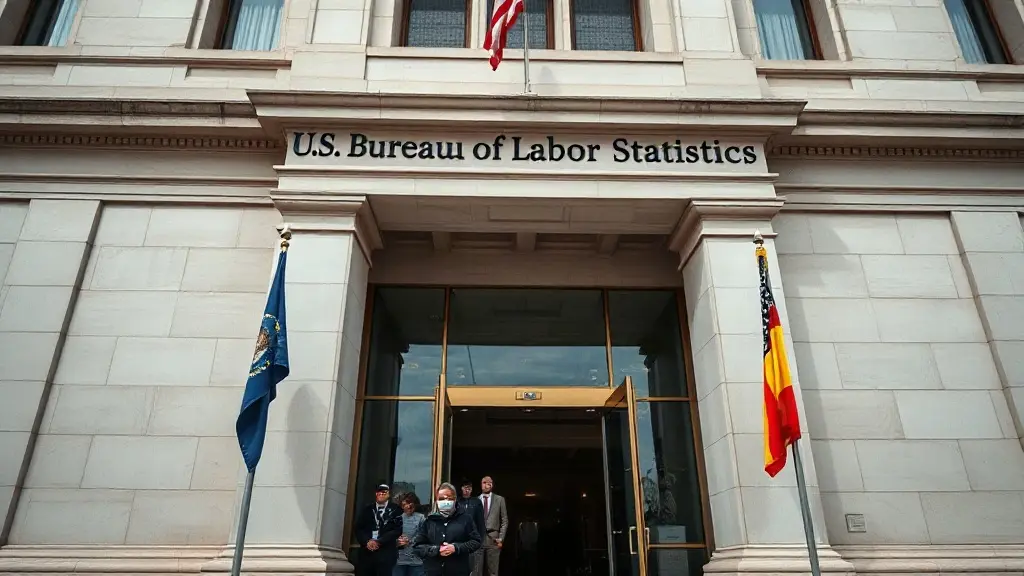
The U.S. economy demonstrated remarkable resilience in October 2026, adding 165,000 jobs, a figure that far exceeded the Dow Jones estimate of 59,000. This surge in nonfarm payrolls, reported by the Bureau of Labor Statistics, reflects a labor market that continues to show strength despite economic uncertainties. The unemployment rate also saw a positive shift, decreasing to 4.1%, down from the anticipated 4.2%. This unexpected performance has raised questions about the sustainability of job growth and its implications for the broader economy.
Job Growth Across Multiple Sectors
The job growth in October was not only robust but also broad-based, with significant contributions from various sectors. Professional and business services led the charge, adding 70,000 jobs, while health care followed with an increase of 42,000. Other sectors that contributed to this growth included transportation and warehousing, which saw an addition of 25,000 jobs, and manufacturing, which added 19,000 positions. This diverse growth pattern indicates a healthy labor market that is not overly reliant on any single sector.
The strength in professional and business services is particularly noteworthy, as it often serves as a bellwether for economic activity. The increase in jobs in this sector suggests that businesses are expanding and investing in their workforce, which could lead to further economic growth in the coming months.
Revisions to Previous Months' Data
In addition to the strong performance in October, revisions to previous months' job data have painted a more favorable picture of the labor market. The August job figures were revised upward to 186,000, an increase of 53,000 from the prior estimate, while September's numbers were adjusted to 60,000, reflecting an upward revision of 31,000. These revisions indicate that the labor market was stronger than previously thought, which may bolster confidence among consumers and investors alike.
Wage Growth and Labor Force Participation
Wage growth also showed positive signs, with average hourly earnings increasing by 0.4% in October, surpassing the expected 0.3%. Year-over-year, wages rose by 3.1%, compared to the anticipated 2.9%. This increase in earnings is crucial as it not only helps workers keep pace with inflation but also supports consumer spending, which is a key driver of economic growth.
However, a broader measure of unemployment, which includes discouraged workers and those holding part-time jobs for economic reasons, rose to 7.9%, up 0.3 percentage points. This increase coincided with a rise of 421,000 in the civilian labor force, suggesting that more individuals are entering the job market, possibly encouraged by the recent job gains. This dynamic could indicate a shift in labor market conditions, where more people are seeking employment opportunities.
Economic Implications and Future Outlook
The unexpected job growth and declining unemployment rate in October could have significant implications for economic policy and market sentiment. Analysts are likely to scrutinize these figures closely as they assess the potential for future interest rate adjustments by the [Federal Reserve](/topic/us-federal-reserve). A stronger labor market may lead to increased consumer spending, which could further stimulate economic growth.
Moreover, the diverse job growth across sectors suggests that the economy is not only recovering but also evolving. As businesses adapt to changing market conditions, the ability to create jobs across various industries will be crucial for sustained economic health.
In summary, the U.S. economy's performance in October 2026 has provided a much-needed boost to confidence among policymakers and market participants. With job growth exceeding expectations and wage increases contributing to consumer spending power, the outlook for the economy appears more optimistic than it has in recent months. However, challenges remain, and the evolving labor market dynamics will require ongoing attention from both economists and government officials.
| Metric | October 2026 | September 2026 | August 2026 |
|---|---|---|---|
| Nonfarm Payrolls (Jobs Added) | 165,000 | 60,000 | 186,000 |
| Unemployment Rate (%) | 4.1 | 4.2 | 4.3 |
| Average Hourly Earnings (%) | 0.4 | N/A | N/A |
| Yearly Wage Growth (%) | 3.1 | N/A | N/A |
| Civilian Labor Force Increase | 421,000 | N/A | N/A |