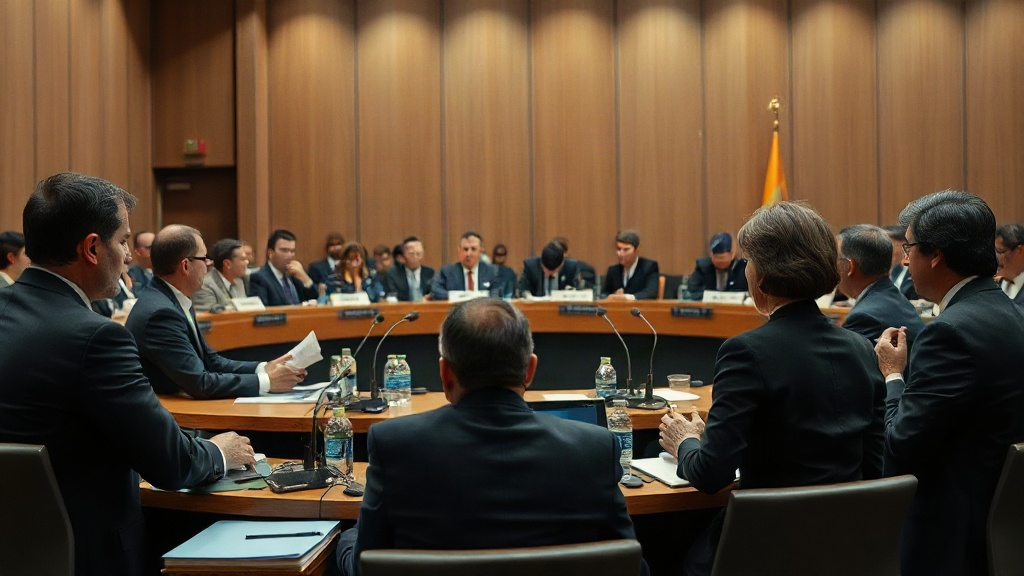
UN Conference on Autonomous Weapons and Global Security
In Geneva, a pivotal UN-backed conference is underway, focusing on the urgent need for regulations surrounding lethal autonomous weapons systems (LAWS). This seventh review conference of the Convention on Certain Conventional Weapons (CCW) is poised to address whether to initiate negotiations on legally binding agreements governing the use of these advanced military technologies. With the backdrop of escalating global tensions and the rapid advancement of artificial intelligence in warfare, the stakes have never been higher.
The discussions come at a time when the deployment of armed drones and autonomous systems in conflict zones, such as Ukraine and the Middle East, raises profound ethical and operational questions. Activists and human rights advocates warn that without stringent regulations, the proliferation of these technologies could lead to catastrophic consequences, including the potential for machines to make life-and-death decisions without human oversight.
The Ethical Dilemma of Killer Robots
The ethical implications of allowing machines to engage in combat are at the forefront of the debate. Pope Leo XIV, alongside U.N. Secretary-General Antonio Guterres, has emphasized the necessity of maintaining human control over lethal force. Guterres has set a deadline for this year to launch negotiations, adding urgency to the discussions. The Pope's encyclical earlier this year condemned the “culture of power” that drives the AI arms race, asserting that entrusting life-and-death decisions to AI systems is morally unacceptable.
Mirjana Spoljaric, president of the International Committee of the Red Cross, echoed these sentiments, stating, “States must act to ensure the future of warfare is not handed over to machines.” This call to action reflects a growing consensus among many nations and advocacy groups that the international community must establish clear guidelines to govern the use of autonomous weapons.
Global Support for Regulation
Support for regulating lethal autonomous weapons is gaining momentum. A coalition of seven countries—Austria, Belgium, Brazil, Ireland, Mexico, New Zealand, and Panama—has formally proposed the initiation of negotiations for a new legally binding agreement on autonomous weapons. This proposal highlights the increasing recognition among nations of the need to address the challenges posed by these technologies.
According to DotMR analysis, approximately 130 countries have expressed support for new international rules governing LAWS. This widespread backing underscores the urgency of the issue and the potential for a significant shift in international military policy. Activists from the Stop Killer Robots coalition have been actively campaigning for public support, running advertisements in major cities like Berlin, London, and Paris to raise awareness about the risks associated with autonomous weapons.
The Military Powers' Hesitation
Despite the growing support for regulation, major military powers, including the United States and Russia, remain hesitant to impose restrictions on their development of autonomous weaponry. These nations argue that limiting their capabilities could hinder their strategic advantages in an increasingly competitive global landscape. The reluctance of these powers to engage in meaningful discussions poses a significant obstacle to the establishment of comprehensive regulations.
The ongoing diplomatic standoff reflects the complexities of balancing national security interests with the ethical imperatives of warfare. As the conference progresses, the divergent views among nations will be tested, with advocates for regulation pushing for a framework that ensures accountability and oversight in the use of lethal autonomous systems.
The Road Ahead: A Call for Urgent Action
As the conference unfolds, the international community faces critical choices about the future of armed conflict and the role of human agency in warfare. U.N. human rights chief Volker Türk has called for nations to “urgently” agree on binding rules for lethal autonomous weapons systems, emphasizing the need for a collective response to the challenges posed by these technologies.
The outcome of the Geneva talks could set a precedent for how the world addresses the intersection of artificial intelligence and military operations. With the potential for autonomous weapons to reshape the battlefield, the need for a robust regulatory framework has never been more pressing. The decisions made in the coming days will have far-reaching implications for global security and the ethical landscape of warfare.
| Forensic Metric / Statutory Dimension | Mainstream Wire Benchmark | DotMR Corroborated Record & Direct Impact |
|---|---|---|
| Number of countries supporting regulation | 130 countries | 130 countries support new international rules on LAWS |
| Proposal for legally binding agreement | 7 countries | Austria, Belgium, Brazil, Ireland, Mexico, New Zealand, Panama propose negotiations |
| U.N. Secretary-General's deadline | 2026 | Deadline set for launch of talks this year |
| Ethical concerns raised by Pope | N/A | Pope denounces AI-driven warfare decisions |
| ICRC President's statement | N/A | “States must act to ensure the future of warfare is not handed over to machines.” |