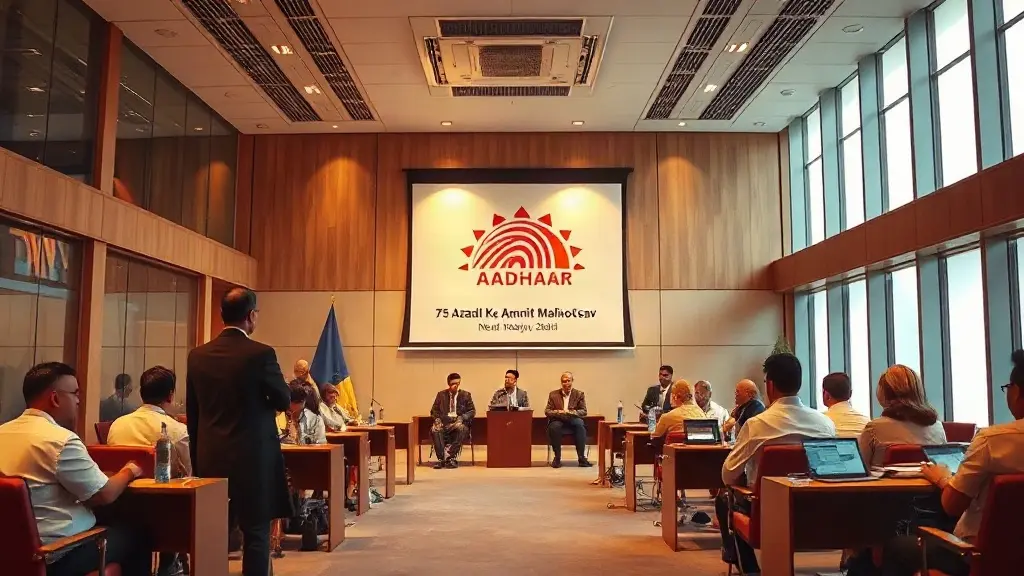
UIDAI's Strategic Move to Enhance Aadhaar Verification
In a significant development for digital identity verification in India, the Unique Identification Authority of India (UIDAI) has onboarded 300 Offline Verification Seeking Entities (OVSEs) as of November 2026. This initiative aims to expand the Aadhaar offline verification ecosystem, facilitating secure and paperless verification across various sectors, including hospitality, healthcare, education, and the gig economy. The onboarding of these entities reflects a growing confidence in Aadhaar's privacy-first digital verification framework, which prioritizes user control and data minimization in compliance with the Digital Personal Data Protection (DPDP) Act.
Growing Adoption of the Aadhaar App
The Aadhaar App has seen remarkable traction, with nearly 7.5 crore downloads since its rollout. This application serves as a crucial digital interface between UIDAI and residents, enabling Aadhaar number holders to access a range of services conveniently. Recent statistics reveal that over 86 lakh mobile number updates, 22.16 lakh address updates, and 40.25 lakh email updates have been facilitated through the app. These figures underscore the app's role in improving the ease of living for residents by allowing them to update their details without needing to visit physical centers.
The app's functionality extends beyond simple updates. It has recorded 4.6 crore biometric lock/unlock transactions, showcasing the growing awareness and adoption of security features that empower residents to control the use of their biometric data. Additionally, 3.61 lakh Aadhaar lock/unlock transactions have been executed through the app, further enhancing user privacy and security.
Impact on Various Sectors
The onboarding of the 300 OVSEs is poised to have a transformative impact across multiple sectors. In the hospitality industry, for instance, hotels can now utilize Aadhaar-based offline verification to streamline check-in processes, enhancing customer experience while ensuring compliance with regulatory requirements. Similarly, healthcare providers can leverage this technology to verify patient identities securely, thus minimizing fraud and improving service delivery.
Educational institutions are also expected to benefit significantly from this initiative. By adopting Aadhaar offline verification, schools and universities can simplify the admission process, ensuring that student identities are verified quickly and efficiently. The gig economy, which often relies on rapid onboarding of service providers, will also find this mechanism beneficial, as it allows for swift and secure verification of gig workers.
Strengthening Digital Identity Framework
UIDAI's initiative aligns with the Government's broader Digital India vision, which aims to improve the accessibility and efficiency of public services through technology. By expanding the institutional ecosystem for offline verification, UIDAI is not only enhancing the digital identity experience for residents but also empowering service providers with a robust verification mechanism.
The onboarding of OVSEs signifies a major advancement in enabling secure, consent-based verification. This approach is designed to empower both service providers and residents, ensuring that the verification process is not only efficient but also respects user privacy. The emphasis on data minimization and user control is particularly noteworthy, as it aligns with the principles outlined in the DPDP Act.
Future Prospects and Challenges
While the onboarding of 300 OVSEs marks a significant milestone, UIDAI faces challenges in ensuring widespread adoption and integration of the offline verification system. Continuous efforts will be required to educate both service providers and residents about the benefits and functionalities of Aadhaar offline verification. Additionally, maintaining the security and integrity of the verification process will be paramount to sustaining user trust.
As UIDAI continues to innovate and expand its services, the focus will remain on enhancing user experience while ensuring compliance with privacy regulations. The successful implementation of this initiative could serve as a model for other countries looking to adopt similar digital identity verification frameworks.
In conclusion, UIDAI's onboarding of 300 OVSEs represents a pivotal step in enhancing the Aadhaar offline verification ecosystem. As the initiative unfolds, it promises to bring about significant improvements in the way residents interact with essential services, ultimately contributing to a more digitally empowered society.
| Metric | Count |
|---|---|
| Total OVSEs Onboarded | 300 |
| Aadhaar App Downloads | 7.5 Crore |
| Mobile Number Updates | 86 Lakh |
| Address Updates | 22.16 Lakh |
| Email Updates | 40.25 Lakh |
| Biometric Lock/Unlock | 4.6 Crore |
| Aadhaar Lock/Unlock | 3.61 Lakh |