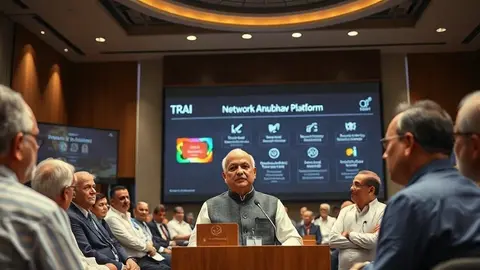
TRAI's Regulatory Framework Update
On November 3, 2026, the Telecom Regulatory Authority of India (TRAI) announced the release of "The Telecommunication Interconnection (Third Amendment) Regulations, 2026," set to take effect on January 1, 2027. This significant regulatory update aims to enhance the interconnection framework among telecom service providers, ensuring seamless communication across networks. The amendments come in response to evolving technological advancements and the need for a more robust regulatory environment.
Interconnection in telecommunications is crucial as it facilitates the technical, operational, and commercial arrangements that connect multiple telecom networks. This connectivity allows users from different service providers to communicate without barriers. The authority to regulate these interconnections is granted to TRAI under Section 11(1)(b) of the TRAI Act, 1997, which empowers it to set terms and conditions for interconnections between service providers.
Stakeholder Engagement and Consultation Process
To ensure the new regulations are relevant and effective, TRAI initiated a comprehensive review process. This began with a Pre-Consultation Paper released on April 3, 2025, which sought stakeholder comments on the existing Telecommunication Interconnection Regulations, 2018. Following this, a Consultation Paper was issued on November 10, 2025, incorporating feedback from the pre-consultation phase.
The consultation process was thorough, with stakeholders given ample opportunity to provide input. Seventeen stakeholders submitted comments, and nine provided counter-comments, reflecting a diverse range of perspectives on the regulatory framework. An Open House Discussion (OHD) held on January 28, 2026, further facilitated dialogue among stakeholders, allowing for a deeper understanding of the challenges and expectations within the industry.
Key Features of the Third Amendment Regulations
The Telecommunication Interconnection (Third Amendment) Regulations, 2026, introduce several key provisions aimed at strengthening the interconnection framework:
1. Interest on Delayed Payments: The regulations now include provisions for interest on delayed payments, ensuring that service providers adhere to financial obligations in a timely manner.
2. Reporting Requirements: Enhanced reporting requirements will improve transparency and accountability among service providers, facilitating better oversight by TRAI.
3. Financial Disincentives: The introduction of financial disincentives aims to enforce compliance with the regulations, encouraging service providers to maintain effective interconnection practices.
4. Alignment with Technological Advancements: The amendments reflect the latest technological developments in the telecommunications sector, ensuring that the regulatory framework remains relevant and effective.
5. Principles of Fair Competition: The regulations uphold principles of transparency, non-discrimination, and fair competition, fostering a more equitable environment for all service providers.
These features are designed to provide greater regulatory certainty to service providers while promoting seamless communication across networks.
Implications for Telecom Service Providers
The implementation of the Third Amendment Regulations is expected to have significant implications for telecom service providers in India. By enhancing the interconnection framework, TRAI aims to facilitate smoother communication between different networks, ultimately benefiting consumers through improved service quality and reliability.
Service providers will need to adapt to the new regulations by ensuring compliance with the updated reporting requirements and financial obligations. The emphasis on timely payments and transparency is likely to lead to a more competitive landscape, as companies that fail to comply may face financial penalties.
Moreover, the alignment of regulations with technological advancements suggests that service providers will need to invest in upgrading their infrastructure to meet the new standards. This could lead to increased operational costs in the short term but may ultimately result in improved service offerings and customer satisfaction.
Conclusion: A Step Towards Enhanced Connectivity
The introduction of the Telecommunication Interconnection (Third Amendment) Regulations, 2026, marks a pivotal moment for the Indian telecommunications sector. By addressing the challenges of interconnection and aligning regulations with technological advancements, TRAI is taking significant steps toward enhancing connectivity and communication across networks.
As the industry prepares for the regulations to take effect on January 1, 2027, stakeholders will need to remain vigilant in their compliance efforts. The success of these regulations will depend on the collective commitment of service providers to uphold the principles of transparency, fairness, and effective interconnection, ultimately benefiting consumers and the broader telecommunications ecosystem.
| Feature | Description |
|---|---|
| Interest on Delayed Payments | Provisions for interest on late payments to enforce timely financial obligations. |
| Reporting Requirements | Enhanced requirements for transparency and accountability among service providers. |
| Financial Disincentives | Introduction of penalties for non-compliance with interconnection regulations. |
| Technological Alignment | Regulations updated to reflect the latest advancements in telecommunications technology. |
| Fair Competition Principles | Emphasis on transparency, non-discrimination, and fair competition among service providers. |