The Telecom Regulatory Authority of India (TRAI) has conducted an Independent Drive Test (IDT) across Ratnagiri District in Maharashtra during September 2026, aimed at assessing the real-time quality of mobile network services provided by various Telecom Service Providers (TSPs). This initiative, which took place from September 8 to September 11, involved extensive testing across diverse environments, including urban areas, hotspots, and public transport hubs. The results, published on November 5, 2026, provide critical insights into the performance of mobile networks in the region, impacting consumers and encouraging TSPs to enhance their services.
Comprehensive Testing Methodology
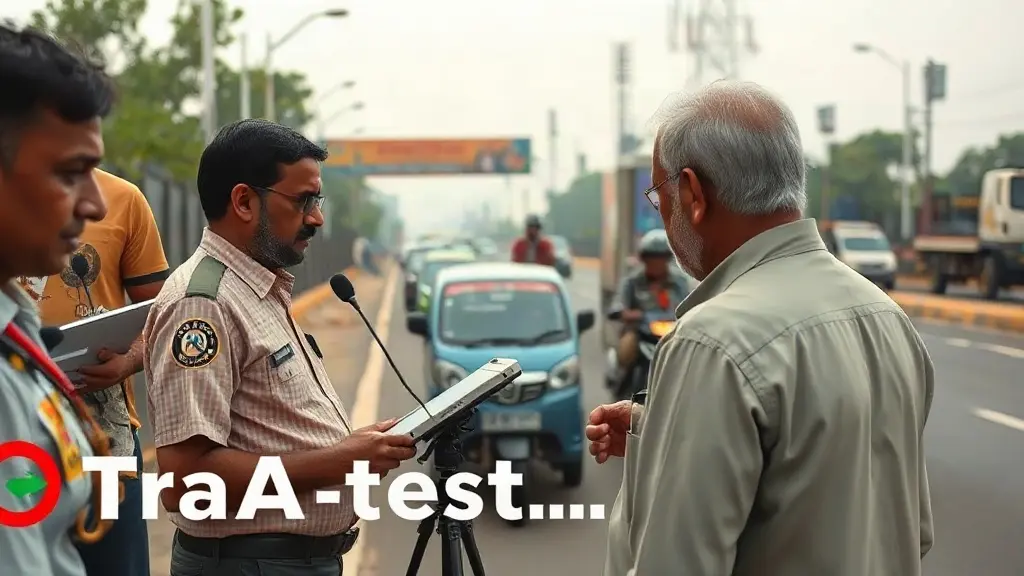
The IDT was meticulously designed to capture the performance of all TSPs across different usage scenarios. TRAI utilized advanced testing methodologies, establishing live data and voice sessions using SIM cards from all major TSPs across 2G, 3G, 4G, and 5G networks. Multiple sophisticated test handsets were employed, and the sessions were monitored and analyzed in real-time using advanced software systems. The drive tests covered a total of 346.1 kilometers in city drives, 131.8 kilometers on highways, and included 11 hotspot locations and 7.6 kilometers of walk tests.
Key Findings on Network Performance
The findings from the drive tests reveal significant disparities in mobile network performance among the TSPs in Ratnagiri District. The assessment focused on several key Quality of Service (QoS) parameters, including coverage, call drop rates, call setup success rates, and data throughput. The results are summarized below:
The coverage gap indicates the number of samples with poor signal strength compared to the total samples collected. For instance, Airtel recorded a coverage gap of 5692 out of 33673 samples, while BSNL had 1484 out of 40900 samples. Such disparities highlight the varying levels of service quality experienced by consumers in the region.
| Parameter | Airtel | BSNL | RJIL | VIL |
|---|---|---|---|---|
| Coverage Gap (Poor Signal) | 5692/33673 | 1484/40900 | 1184/42801 | 4823/38305 |
| Dropped Calls | 15/301 | 32/338 | 10/387 | 12/339 |
| Call Silence Instances | 15/282 | 11/310 | 23/355 | 6/306 |
| Average Download Speed (Mbps) | 113.81 | 4.42 | 134.77 | 38.93 |
| Average Upload Speed (Mbps) | 17.46 | 2.62 | 134.77 | 38.93 |
Call Quality and Data Performance
The IDT also assessed call quality through metrics such as dropped calls and call silence instances. Airtel experienced a dropped call rate of 15 out of 301 calls, while BSNL had a higher rate of 32 out of 338 calls. The call silence instances, which measure the total number of silence occurrences lasting more than three seconds, were also concerning, particularly for RJIL, which recorded 23 instances out of 355 calls.
Data performance metrics revealed stark contrasts as well. Airtel achieved an average download speed of 113.81 Mbps, significantly higher than BSNL's 4.42 Mbps. RJIL led the pack with an impressive 134.77 Mbps for download speeds, while VIL lagged at 38.93 Mbps. Upload speeds followed a similar trend, with Airtel at 17.46 Mbps and BSNL at a mere 2.62 Mbps.
Implications for Consumers and TSPs
The results of the IDT serve as a crucial resource for consumers in Ratnagiri District, providing them with insights into the performance of their respective TSPs. The findings are expected to encourage TSPs to address the identified gaps in service quality, particularly in areas with significant coverage issues and high call drop rates. TRAI's commitment to transparency in reporting these findings is aimed at fostering a competitive environment where TSPs are motivated to improve their services to retain and attract customers.
Conclusion: A Call for Improvement
As mobile connectivity becomes increasingly vital for daily life, the performance of telecom networks in Ratnagiri District underscores the need for continuous monitoring and improvement. The IDT conducted by TRAI not only highlights the current state of mobile network services but also serves as a catalyst for TSPs to enhance their infrastructure and service delivery. With the rapid advancement of technology and increasing consumer expectations, addressing these performance gaps will be essential for TSPs to thrive in the competitive telecom landscape of Maharashtra.