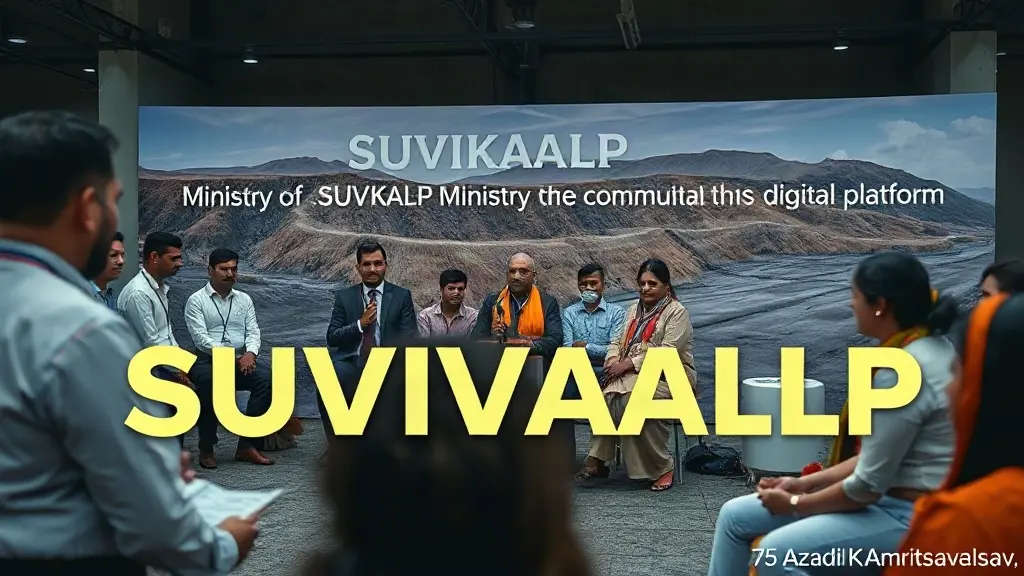
Introduction to SUVIKALP
The Ministry of Coal, Government of India, has launched SUVIKALP, a pioneering digital platform designed to repurpose closed and abandoned mines into productive assets. Announced on November 3, 2026, SUVIKALP aims to create a structured approach to mine repurposing, ensuring that post-mining land is utilized effectively while addressing environmental restoration and socio-economic development. This initiative is particularly significant as it seeks to overcome the challenges of fragmented assessments and limited community engagement in traditional mine closure processes.
A Comprehensive Framework for Mine Repurposing
SUVIKALP establishes a scientific, transparent, and standardized framework for identifying suitable post-mining land-use opportunities. The platform integrates various parameters, including geo-mining characteristics, environmental conditions, infrastructure availability, and socio-economic factors, into a unified digital platform. Users can create comprehensive site profiles by entering relevant mine-specific information, which allows for systematic assessments of potential repurposing alternatives.
The platform employs a Multi-Criteria Decision-Making (MCDM) methodology based on the TOPSIS (Technique for Order Preference by Similarity to Ideal Solution) approach. This methodology facilitates objective comparisons of repurposing options, providing stakeholders with transparent and evidence-based recommendations. The structured assessment process includes factor selection, generation of potential options, integration of community priorities, suitability assessment, and final ranking, enabling informed decision-making based on site-specific conditions.
Integrating Community Priorities through RECLAIM
Recognizing the importance of community involvement in sustainable mine repurposing, SUVIKALP incorporates the RECLAIM framework. This Community Engagement and Development Framework systematically integrates local priorities into the project evaluation process. By considering community preferences alongside technical feasibility and environmental suitability, SUVIKALP ensures that proposed redevelopment initiatives align with local development needs, employment generation, and long-term community benefits.
The participatory approach promoted by SUVIKALP strengthens the linkage between mine closure, regional development, and inclusive growth. This integration of community perspectives is crucial for fostering trust and cooperation among stakeholders, ultimately leading to more successful and sustainable repurposing projects.
PRISM: From Project Identification to Implementation
A standout feature of SUVIKALP is its PRISM (Post-Mining Repurposing Implementation Strategic Model), which extends the platform's capabilities beyond project identification and ranking. PRISM provides a structured approach to exploring implementation pathways, including project vision, repurposing strategies, investment dynamics, and monitoring.
Supported by an integrated knowledge repository, PRISM offers stakeholders access to project concept notes, national and international case studies, sample tender documents, and best-practice resources. This comprehensive support system enables stakeholders to transition from identifying suitable opportunities to understanding the practical requirements for project development and execution.
Future Directions for SUVIKALP
As SUVIKALP moves forward, the focus will be on expanding its adoption and strengthening the transition from project recommendations to implementation. Key priorities include enhancing community engagement, refining the assessment methodologies, and promoting knowledge sharing among stakeholders. The initiative represents a significant step towards sustainable mine repurposing, aligning with the broader goals of environmental restoration and socio-economic development in mining regions.
The successful implementation of SUVIKALP could set a precedent for similar initiatives globally, showcasing how technology and community engagement can transform the mining landscape. By addressing the challenges associated with mine closure and repurposing, SUVIKALP aims to create a more sustainable and inclusive future for communities affected by mining activities.
Conclusion
In summary, SUVIKALP is a groundbreaking tool that addresses the complexities of mine repurposing in India. By integrating scientific methodologies, community priorities, and a structured implementation framework, it aims to transform closed and abandoned mines into productive assets. This initiative not only enhances land use but also promotes sustainable development and community well-being, marking a significant advancement in the mining sector's approach to post-mining land management.
| Feature | Description | Impact |
|---|---|---|
| Launch Date | November 3, 2026 | Initiation of SUVIKALP tool |
| Methodology | Multi-Criteria Decision-Making (MCDM) using TOPSIS | Objective assessment of repurposing options |
| Community Framework | RECLAIM framework for community engagement | Aligns projects with local development needs |
| Implementation Model | PRISM for structured project implementation | Guides stakeholders from identification to execution |
| Focus Areas | Environmental restoration, socio-economic development, community benefits | Promotes sustainable and inclusive growth |