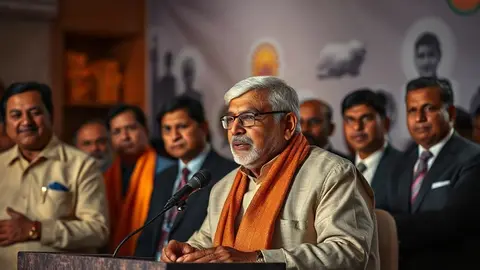
On November 5, 2026, the [Supreme Court of India](/topic/supreme-court-of-india) issued a landmark directive mandating that authorities must act within 24 hours of issuing detention orders. This ruling comes in the wake of increasing concerns regarding the misuse of detention powers and the potential infringement on civil liberties. The court's decision aims to ensure that individuals detained under various laws are afforded their rights and that due process is upheld. The ruling has significant implications for law enforcement agencies and the judicial system, emphasizing the need for accountability and transparency in detention practices.
Context of the Supreme Court Ruling
The Supreme Court's ruling follows a series of high-profile cases where individuals were detained without adequate justification or timely legal recourse. According to DotMR analysis, the court's decision is rooted in the fundamental rights guaranteed by the Constitution of India, particularly the right to personal liberty under Article 21. The court expressed concern that prolonged detention without prompt judicial oversight could lead to arbitrary actions by law enforcement, undermining the rule of law.
In recent months, there have been numerous reports of individuals being detained under laws such as the National Security Act (NSA) and the Unlawful Activities (Prevention) Act (UAPA) without timely access to legal representation. The Supreme Court's intervention is seen as a necessary step to curb these practices and restore faith in the judicial system.
Implications for Law Enforcement Agencies
The directive imposes a strict timeline on law enforcement agencies, compelling them to ensure that any detention is justified and that detainees are informed of their rights. Failure to comply with the 24-hour deadline could lead to legal repercussions for officers involved, including potential contempt of court charges. This ruling is expected to prompt law enforcement agencies to reevaluate their protocols regarding detention and arrest procedures.
Legal experts believe that this ruling could lead to a significant shift in how detention cases are handled across the country. According to a senior advocate familiar with the case, "This ruling is a wake-up call for law enforcement. It reinforces the need for accountability and ensures that individuals are not left in legal limbo."
Reactions from Civil Rights Organizations
Civil rights organizations have welcomed the Supreme Court's decision, viewing it as a crucial step towards protecting individual liberties. Activists argue that the ruling will help prevent the misuse of detention laws, which have often been criticized for being used to silence dissent and target marginalized communities.
A representative from a prominent civil rights group stated, "This ruling is a victory for justice and human rights. It sends a clear message that the judiciary will not tolerate arbitrary detentions. We hope this leads to more comprehensive reforms in detention laws."
However, some critics caution that while the ruling is a positive development, it is only a partial solution to the broader issues surrounding detention practices in India. They argue that more systemic reforms are needed to address the root causes of arbitrary detentions and to ensure that laws are not misused.
The Role of the Judiciary in Safeguarding Rights
The Supreme Court's ruling highlights the critical role of the judiciary in safeguarding individual rights against potential overreach by the state. The court's proactive stance in addressing detention issues reflects its commitment to upholding constitutional values and protecting citizens from unlawful actions.
Legal analysts note that this ruling could set a precedent for future cases involving detention and civil liberties. As the judiciary continues to assert its authority in matters of personal liberty, it may pave the way for more robust legal protections for individuals facing detention.
Future Outlook and Legal Reforms
Looking ahead, the Supreme Court's directive may catalyze broader discussions on legal reforms concerning detention laws in India. Policymakers and legal experts are likely to engage in dialogues aimed at revising existing laws to ensure they align with constitutional principles and international human rights standards.
The government may also be compelled to review its approach to detention, particularly in cases involving national security and public order. As the legal landscape evolves, it will be essential for all stakeholders to collaborate in creating a framework that balances security concerns with the protection of individual rights.
In conclusion, the Supreme Court's ruling imposing a 24-hour deadline for detention orders marks a significant development in the ongoing struggle for civil liberties in India. As the implications of this ruling unfold, it will be crucial for all stakeholders to ensure that the principles of justice and accountability are upheld in the face of evolving legal challenges.
| Date | Event | Implication |
|---|---|---|
| Nov 5, 2026 | Supreme Court ruling on detention | 24-hour deadline for authorities |
| 2026 | Increase in arbitrary detentions | Calls for legal reforms |
| 2026 | Civil rights organizations' response | Advocacy for individual liberties |