India's Clean Energy Journey: Achievements and Goals
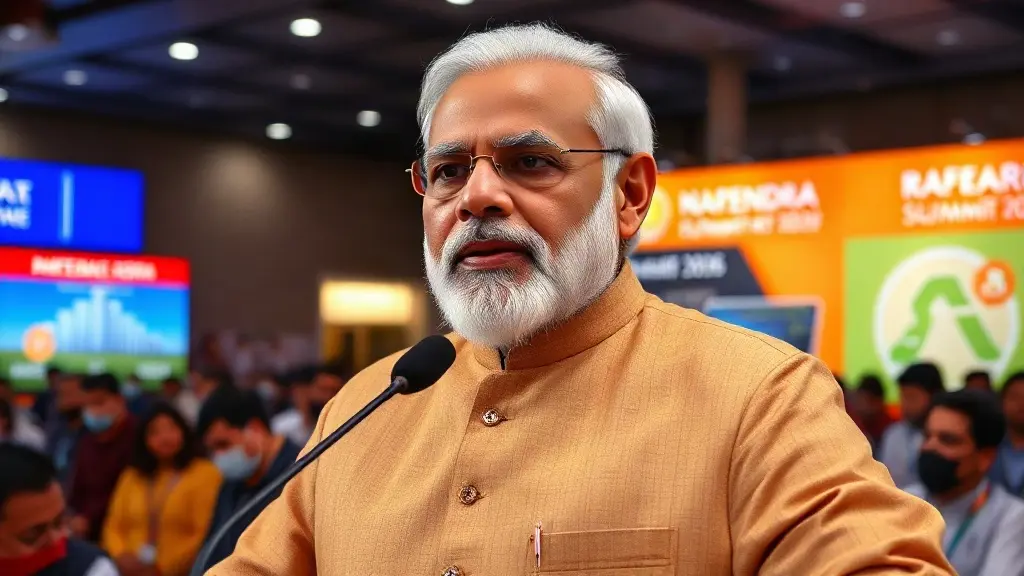
During his address, PM Modi reflected on India's clean energy journey over the past twelve years, characterized by commitment, innovation, and performance. He highlighted the nation's success in fulfilling its COP-26 commitment to achieve 500 Gigawatts of non-fossil capacity by 2030, achieving its Paris Agreement pledge of sourcing half its installed power capacity from non-fossil sources five years ahead of schedule in 2025.
As of now, India ranks among the top three nations globally in solar and renewable energy, with over 50% of its installed capacity derived from non-fossil sources. Modi announced an ambitious target to add another 500 Gigawatts of non-fossil capacity over the next 10 to 11 years, stating, "This target is somewhat difficult, but I have faith in the capability of my country; therefore I say, We will do it!"
The Impact of Clean Energy on Economic Stability
The Prime Minister underscored the direct correlation between energy security and economic stability, warning against the dangers of over-reliance on fossil fuels. He stated, "Continued over-reliance on fossil fuels will repeatedly disrupt the world economy because fossil reserves are finite and concentrated in a few regions." In contrast, he praised the limitless potential of clean energy, which he believes is crucial for sustainable development.
Modi's remarks come in the wake of significant global disruptions, including the COVID-19 pandemic and the ongoing crisis in West Asia, which have tested the resilience of economies worldwide. He noted that India's proactive investments in clean energy have shielded the nation from severe external shocks, asserting, "If India had not invested in clean energy and created new systems for this over the past decade, then our crisis could have been much more severe than the rest of the world."
PM Surya Ghar Muft Bijli Yojana: A Model for Energy Security
One of the standout initiatives highlighted by PM Modi is the PM Surya Ghar Muft Bijli Yojana, launched in February 2024. This program aims to install rooftop solar panels in one crore homes across India. Within just 24 to 25 months, over 65 lakh households have benefited from this initiative, with one lakh new homes joining the movement every six days. According to studies, this program has led to a reduction in electricity bills by approximately 76%, with many families now earning money by selling surplus power back to the grid.
Modi remarked, "This scheme of India can give great strength to energy security in many countries," emphasizing the potential for India’s clean energy innovations to benefit nations worldwide.
A Call to Innovators and Startups
In his address, PM Modi urged startups, IITs, and innovators to develop models that maximize household energy needs through solar power. He stated, "This new era of the solar revolution is not just about adoption; it is equally driven by innovation." This call to action reflects the government's commitment to fostering a culture of innovation in the renewable energy sector, aiming to position India as a global leader in clean energy technology.
Conclusion: A Vision for the Future
As the Bharat Renewable Energy Summit 2026 unfolds, the emphasis on collaboration and shared benefits in the clean energy sector resonates strongly. PM Modi's vision for a sustainable energy future is not only ambitious but also rooted in the belief that India can lead the way in addressing global energy challenges. The Prime Minister concluded, "The successes of India in this field will come in handy for numerous countries of the world," reinforcing the notion that India's journey in renewable energy is a model for others to follow.
In summary, the Bharat Renewable Energy Summit 2026 serves as a pivotal platform for advancing India's clean energy agenda, showcasing the nation's commitment to sustainable development and global cooperation in the face of pressing energy challenges.
| Metric | Current Status | Target by 2030 |
|---|---|---|
| Non-fossil installed capacity | 300 Gigawatts | 500 Gigawatts |
| Households under PM Surya Yojana | 6.5 million | 10 million |
| Reduction in electricity bills | 76% for many homes | N/A |