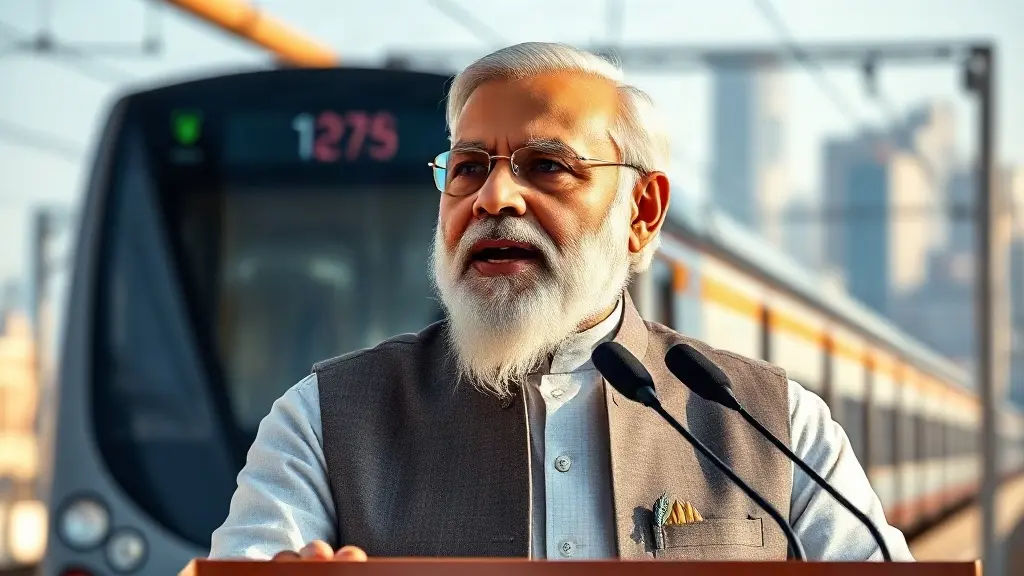
In a significant announcement, [[Prime Minister](/prime-minister-celebrates-crpfs-historic-zero-casualty-milestone)](/prime-minister-celebrates-crpfs-historic-zero-casualties-achievement) [Narendra Modi](/topic/narendra-modi) highlighted the remarkable expansion of India's Metro network, which has surged from a mere 248 kilometers in 2014 to nearly 1,200 kilometers across 26 cities as of November 2026. This transformation has not only revolutionized urban transportation but has also significantly impacted the daily lives of over one crore commuters who rely on the Metro for their daily travel.
Metro Network Expansion: A Statistical Overview
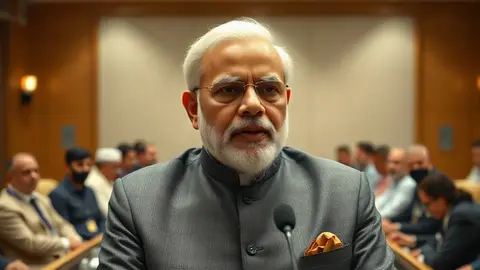
The Prime Minister's remarks came during a press briefing where he emphasized the rapid development of the Metro infrastructure in India. In 2014, the country had only five cities with Metro lines, but today, 26 cities are connected through this extensive network. The increase in Metro length represents a staggering growth of approximately 383%, showcasing the government's commitment to enhancing urban mobility.
According to official records reviewed by DotMR, the expansion has been fueled by various government initiatives aimed at modernizing urban transport systems. The Prime Minister stated, "If India’s Metro network had continued expanding at the pace it did before 2014, how long would the wait be for cities like Pune to have a metro? YEARS…no…DECADES perhaps. And that was UNACCEPTABLE."
This expansion has not only improved connectivity but has also contributed to reducing traffic congestion in major urban areas, leading to enhanced productivity and better quality of life for citizens.
Economic and Social Impacts of the Metro Expansion
The Metro network's growth has profound implications for urban India. With over one crore people traveling by Metro daily, the system has become a lifeline for millions. The Prime Minister noted that this expansion means less time spent in traffic, allowing families to spend more quality time together and increasing overall productivity.
The economic benefits are also noteworthy. The Metro system has created thousands of jobs, both directly and indirectly, through construction, operation, and maintenance. Furthermore, improved public transport encourages more people to use the Metro instead of personal vehicles, contributing to reduced pollution levels in urban areas.
Government Initiatives Driving Metro Development
The rapid expansion of the Metro network can be attributed to several key government initiatives. The introduction of the Metro Rail Policy in 2017 laid the groundwork for accelerated development, allowing for faster project approvals and funding mechanisms. Additionally, the government has focused on public-private partnerships (PPP) to leverage private investment in Metro projects.
The Prime Minister's Office has also emphasized the importance of integrating Metro systems with other forms of public transport, such as buses and suburban trains, to create a seamless travel experience for commuters. This holistic approach aims to reduce the dependency on personal vehicles, thereby addressing urban congestion and environmental concerns.
Future Prospects: Expanding the Metro Network Further
Looking ahead, the government plans to continue expanding the Metro network to cover more cities and regions. The focus will be on enhancing connectivity in tier-2 and tier-3 cities, where public transport options are often limited. The Prime Minister stated, "This is the transformation we are working towards for urban India!"
Future projects include extending existing lines, introducing new routes, and upgrading technology to improve efficiency and safety. The government aims to ensure that the Metro remains an affordable and accessible mode of transport for all citizens.
Conclusion: A Transformative Journey for Urban India
The expansion of India's Metro network from 248 km to nearly 1,200 km in just over a decade is a testament to the government's commitment to transforming urban mobility. This achievement not only enhances the quality of life for millions of commuters but also positions India as a leader in modern urban transport solutions.
As the Metro network continues to grow, it will play a crucial role in shaping the future of urban India, making cities more livable and sustainable for generations to come.
| Year | Metro Length (km) | Number of Cities | Daily Commuters (approx.) |
|---|---|---|---|
| 2014 | 248 | 5 | 1 crore |
| 2026 | 1,200 | 26 | 1 crore |