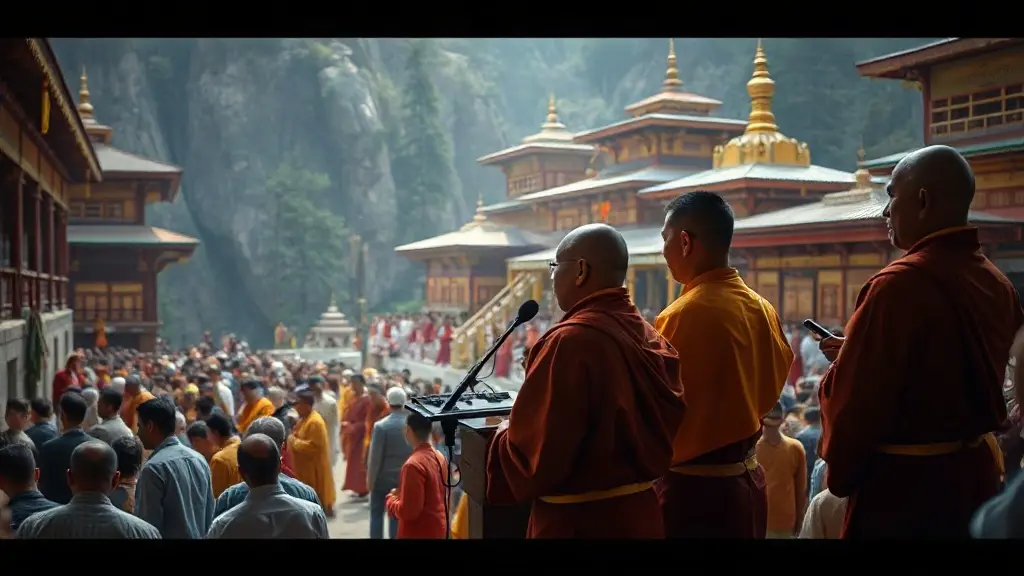
More than 21,000 devotees have gathered at the Gaden Namgyal Lhatse, commonly known as Tawang Monastery, to pay homage to the sacred relics of Shakyamuni Buddha. This significant exposition, organized by the Ministry of Culture in collaboration with the International Buddhist Confederation and the Government of Arunachal Pradesh, marks the return of these relics to Arunachal Pradesh after a 13-year hiatus. The event, which has attracted visitors from Tawang and surrounding regions, provides a unique opportunity for Buddhist monks, nuns, and the general public to engage with India's rich Buddhist heritage.
Historical Significance of the Relics
The sacred relics of Shakyamuni Buddha were discovered in 1898 at Piprahwah, Uttar Pradesh, and have since been preserved at the National Museum in New Delhi. Their discovery is considered a pivotal moment in the archaeological history of Buddhism, shedding light on the life and teachings of the Buddha. The relics, which hold immense historical, archaeological, and spiritual significance, are revered by Buddhist communities worldwide. The current exposition at Tawang Monastery not only allows devotees to pay their respects but also serves as a reminder of the enduring legacy of the Buddha's teachings.
Special Exhibitions Highlighting Buddhist Heritage
In addition to the display of the sacred relics, two special exhibitions have been organized at Tawang Monastery to further educate visitors about the rich legacy of Buddhism. The first exhibition, titled ‘Unearthing the Sacred Piprahwa: The Story of the Holy Buddha Relics and Their Discovery,’ is presented by the International Buddhist Confederation. It traces the historical significance of the relics and their discovery, providing context for their importance in Buddhist history.
The second exhibition, ‘Crossroads of Dhamma: Classical Legacies, Living Art, and Anthropological Perspectives,’ curated by the National Museum, New Delhi, showcases the historical, artistic, and cultural dimensions of Buddhism. Together, these exhibitions aim to deepen visitors' understanding of the Buddhist faith and its impact on culture and society.
Devotee Engagement and Community Involvement
The response from the public has been overwhelming, with over 21,000 devotees visiting the monastery to seek blessings in the presence of the sacred relics. Many have traveled from distant regions to participate in this spiritual event, highlighting the strong community ties and devotion among Buddhists in Arunachal Pradesh and beyond. The exposition has created a vibrant atmosphere at Tawang Monastery, with prayers, rituals, and communal gatherings taking place throughout the event.
The Ministry of Culture has emphasized the importance of such initiatives in promoting and preserving India's rich Buddhist heritage. The exposition not only serves as a spiritual gathering but also as a platform for cultural exchange and understanding among diverse communities.
Future of the Sacred Relics
Following the conclusion of the exposition at Tawang Monastery, the sacred relics will continue their journey across Arunachal Pradesh. They are scheduled to be displayed at TGL Monastery (Lower Gompa) in Bomdila from November 8 to 13, 2026, and will then move to the Golden Pagoda in Namsai from November 14 to 20, 2026. The relics are expected to return to the National Museum in New Delhi on November 21, 2026. This tour aims to reach a broader audience, allowing more devotees to pay homage and engage with the teachings of the Buddha.
The Government of India’s commitment to preserving and promoting Buddhist heritage is evident in this initiative. It reflects a dedication to disseminating the timeless teachings of Bhagwan Buddha, which emphasize peace, compassion, wisdom, and universal brotherhood.
Conclusion: A Celebration of Faith and Heritage
The exposition of the sacred relics of Shakyamuni Buddha at Tawang Monastery is not just a religious event; it is a celebration of faith, culture, and community. With over 21,000 devotees participating, the event underscores the significance of the relics in the lives of many and the enduring influence of Buddhist teachings in contemporary society. As the relics continue their journey through Arunachal Pradesh, they carry with them the hopes and prayers of countless individuals, fostering a deeper connection to the rich tapestry of India’s Buddhist heritage.