Understanding Stubble Burning in India
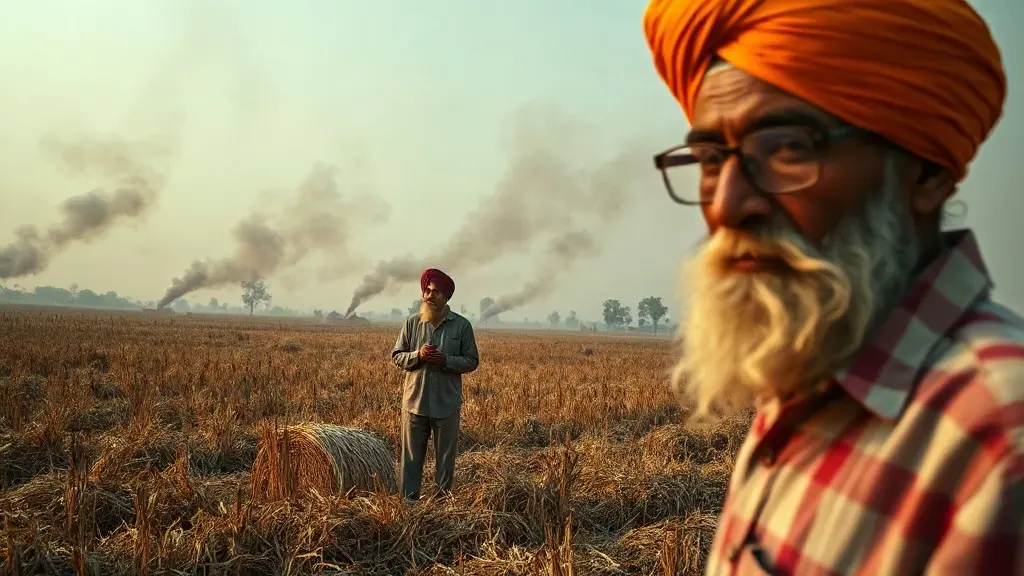
Stubble burning has become a critical environmental issue in India, particularly in the Indo-Gangetic Plain, where the air quality deteriorates significantly during the winter months. According to a recent study by researchers Sujit Raghunathrao Jagadale and Javed M. Shaikh at the Indian Institute of Management, Amritsar, the phenomenon of stubble burning is not merely an agricultural practice but a complex interplay of governmentality and market failures. This research, published in the Journal of Macromarketing, highlights how the current governance framework contributes to the persistence of this environmentally damaging practice.
The Role of Governmentality in Agricultural Practices
Governmentality, a concept popularized by philosopher Michel Foucault, refers to the way governments try to produce citizens best suited to fulfill those governments' policies. In the context of stubble burning, Jagadale and Shaikh argue that the Indian government's policies inadvertently encourage farmers to resort to burning crop residues. The researchers note, "The neoliberal policies have created an environment where farmers are left with limited options, leading them to choose the cheapest method of clearing their fields: burning."
The study indicates that the lack of effective policy enforcement and the absence of viable alternatives for residue management contribute to the ongoing crisis. Farmers, particularly in Punjab, Haryana, Rajasthan, and Uttar Pradesh, face economic pressures that make stubble burning an attractive option despite its environmental consequences.
Market Failures and Economic Pressures
The economic landscape for farmers in India is fraught with challenges, including rising costs of inputs, fluctuating market prices, and inadequate support systems. The researchers highlight that market failures exacerbate the stubble burning issue. "Farmers are caught in a vicious cycle of debt and low profitability, which forces them to adopt practices that are detrimental to both their health and the environment," they explain.
The study emphasizes that the lack of access to technology and resources for sustainable farming practices further limits farmers' choices. With the government focusing on short-term agricultural outputs rather than long-term sustainability, farmers often resort to burning stubble as a quick solution to prepare their fields for the Rabi wheat crop.
Environmental and Health Impacts
The environmental ramifications of stubble burning are severe. The practice contributes significantly to air pollution, particularly in Delhi, where the air quality index often reaches hazardous levels during the winter months. The researchers point out that particulate matter from stubble burning adds to the existing pollution from vehicles, power plants, and construction activities, creating a toxic mix that poses serious health risks to millions.
According to the study, "The cessation of monsoon winds and the formation of an inversion layer trap these pollutants, leading to a persistent haze that affects respiratory health and overall quality of life."
Policy Recommendations for Sustainable Solutions
To address the stubble burning crisis, Jagadale and Shaikh propose several policy recommendations aimed at mitigating the issue. They advocate for the implementation of comprehensive support systems for farmers, including financial incentives for adopting sustainable agricultural practices. The researchers suggest that the government should invest in technology that allows for the efficient management of crop residues, such as bio-mass conversion and composting.
Moreover, the study calls for a shift in governmental focus from short-term agricultural productivity to long-term environmental sustainability. "Only by rethinking our approach to agricultural policies can we hope to reduce stubble burning and its associated impacts," they conclude.
Conclusion: A Call for Action
The findings of this study underscore the urgent need for a multi-faceted approach to tackle the stubble burning crisis in India. By addressing the underlying issues of governmentality and market failures, policymakers can create an environment that supports farmers while protecting public health and the environment. As the winter months approach, the time for action is now, and the future of both farmers and urban populations hangs in the balance.
| Key Metrics | Value |
|---|---|
| Stubble Burning Area (Punjab) | 1.5 million hectares |
| Air Quality Index (Delhi) | 500+ (hazardous) |
| Farmers Affected | 10 million |
| Economic Losses from Pollution | $10 billion annually |