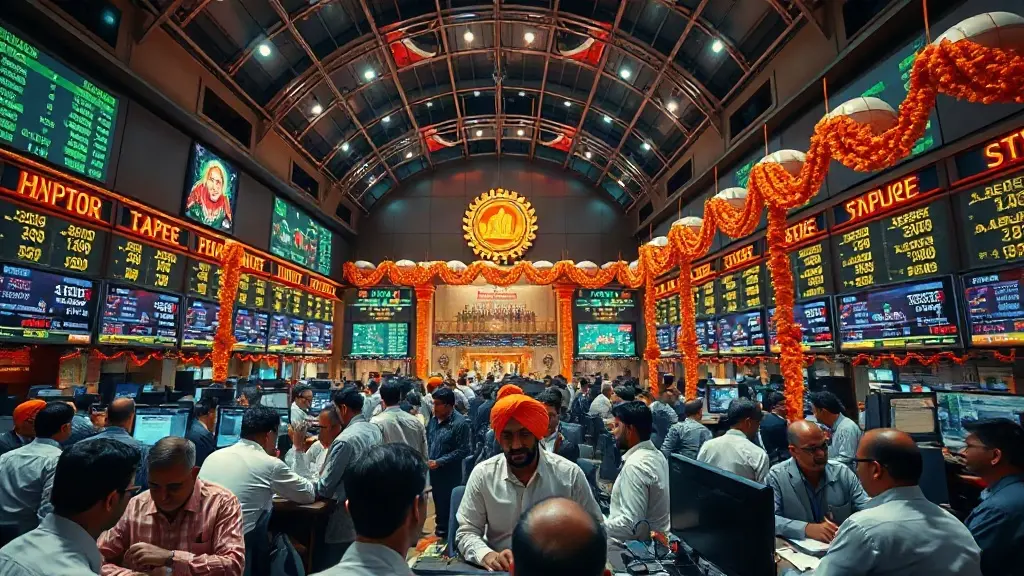
In India, the annual tradition of Muhurat Trading marks a significant occasion for investors, coinciding with Diwali celebrations. This year, the special trading session is scheduled for November 8, 2026, from 2:20 PM to 3:30 PM, with a pre-open session starting at 2:05 PM. As investors prepare to participate in this auspicious event, questions arise regarding the purchase of mutual funds, index funds, and exchange-traded funds (ETFs) during this period. Experts have provided insights into the operational specifics and what investors should consider before making transactions.
Understanding Muhurat Trading and Its Significance
Muhurat Trading is a symbolic event in Indian financial markets, celebrated on Diwali Laxmi Pujan day. It is believed that investing during this time brings prosperity and good fortune. The National Stock Exchange (NSE) and [Bombay Stock Exchange](/topic/sensex) (BSE) conduct this special session every year, allowing investors to trade equities. However, the rules governing mutual funds and ETFs differ significantly, which is crucial for investors to understand.
Trading Mechanics for ETFs During Muhurat Session
According to Harsh Vardhan Dawar, Founder of Wealth Cafe, investors can buy and sell ETFs through their brokers during the Muhurat Trading session. Orders placed during this time will be executed at the prevailing market rates. The trades conducted on November 8 will follow a T+1 settlement cycle, meaning ETF units will be credited to investors' demat accounts by November 9. This quick turnaround is a key advantage for those looking to capitalize on market movements during this festive period.
Mutual Funds: Order Timing and NAV Considerations
In contrast to ETFs, mutual funds and index funds operate under different guidelines. Investors can place orders for mutual funds at any time, but these transactions do not benefit from live market pricing during the Muhurat session. As noted by Anooshka Soham Bathwal, CEO of Dhanvesttor, orders placed on November 8 will be processed on the next working day, November 9, at that day's closing net asset value (NAV). This means that investors should not expect to receive the NAV from the Muhurat Trading session itself.
Furthermore, the acceptance of orders on Sundays varies by Asset Management Companies (AMCs). Some may reject Sunday orders, while others may process them on the next business day. Investors are advised to check with their respective platforms to confirm their policies regarding Sunday transactions.
Key Considerations for Investors
Before engaging in Muhurat Trading, investors should consider several factors. Bathwal emphasizes the importance of assessing liquidity, transaction volume, and the spread between bids and offers. These elements can significantly impact the effectiveness of trades executed during the session. Additionally, she recommends using limit orders instead of market orders to better control the price at which transactions are executed.
For mutual funds, investors should verify whether their AMC or platform accepts transactions on Sundays. Lump-sum investments, systematic investment plans (SIPs), and redemptions will follow the regular processing schedule, with SIPs due on Sunday being processed on the next working day.
Symbolic Tradition vs. Market Advantage
Vedant Gupte, Co-Founder of Trackk, highlights that while Muhurat Trading is steeped in tradition, it should not be viewed as a guaranteed market advantage. Investors are encouraged to treat this session as an optional opportunity to initiate long-term investment plans rather than a necessity. The symbolic nature of the event can enhance the emotional connection to investing, but sound financial principles should guide decision-making.
Summary of Key Trading Parameters
As the Muhurat Trading session approaches, investors are reminded to conduct thorough research and consult with certified experts before making any investment decisions. This year’s session on November 8 offers a unique opportunity to engage with the markets, but understanding the nuances of mutual funds and ETFs is essential for making informed choices.
| Parameter | ETFs | Mutual Funds/Index Funds |
|---|---|---|
| Purchase | Through stock exchanges | Through AMCs or investment platforms |
| Pricing | Live market price | Applicable NAV |
| Order Timing | 2:20 PM–3:30 PM on 8 November | Orders may be placed anytime, subject to platform rules; generally processed on 9 November. |
| Buying and Selling | Possible during the special session | Processed on the next working day |
| Settlement/Allotment | T+1; expected 9 November | Units expected within two working days, subject to processing |