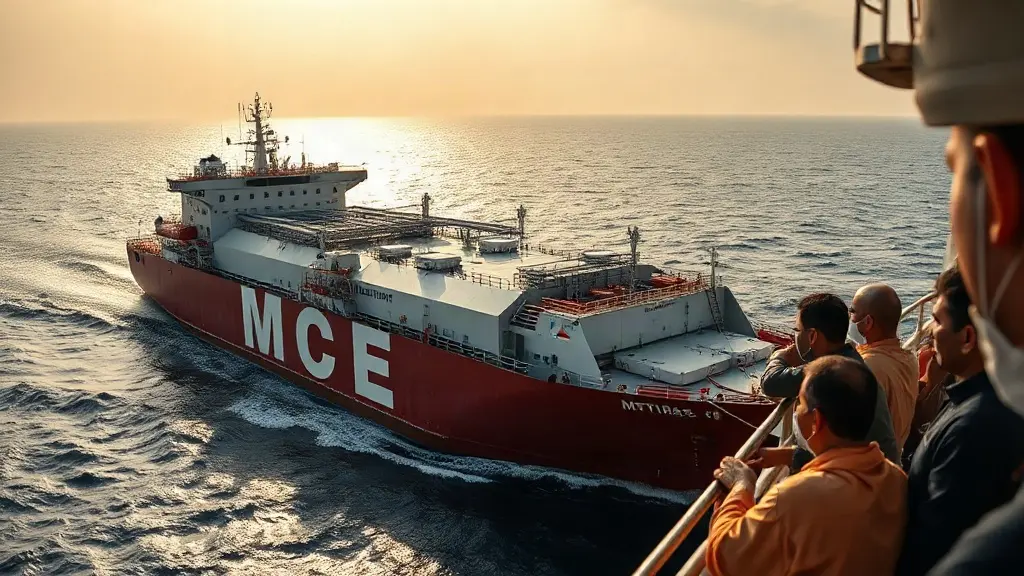
On November 11, 2026, a Liberian-flagged Very Large Crude Carrier (VLCC), MT Fujairah Energy, was struck by a projectile while navigating the Persian Gulf, resulting in injuries to four crew members, including one Indian national. The incident has raised significant concerns regarding maritime security in the region, particularly for Indian seafarers operating in volatile waters. Union Minister of Ports, Shipping and Waterways, Sarbananda Sonowal, confirmed that the remaining 18 crew members, which include five other Indian nationals, are safe and accounted for.
Incident Overview and Immediate Response
The attack on MT Fujairah Energy occurred during its transit through the Persian Gulf, a critical maritime route for global oil transportation. The vessel was reportedly targeted by an unidentified projectile, leading to injuries among the crew. According to official statements, the injured Indian seafarer is receiving medical attention, and the government is closely monitoring the situation to ensure the safety of all crew members.
Union Minister Sarbananda Sonowal emphasized the government's commitment to the welfare of Indian seafarers, stating, "We are in constant touch with the shipping company and relevant authorities to ensure the safety of our nationals. The situation is being monitored closely, and we will provide all necessary support to the affected individuals and their families."
Maritime Security Concerns in the Persian Gulf
The Persian Gulf has been a hotspot for maritime security issues, with various incidents involving attacks on commercial vessels in recent years. The region's geopolitical tensions, particularly involving Iran and its neighboring countries, have heightened risks for shipping operations. The attack on MT Fujairah Energy underscores the ongoing threats faced by vessels transiting this crucial waterway.
Experts in maritime security have raised alarms about the implications of such attacks on international shipping lanes. "The Persian Gulf is vital for global oil supply, and any disruption can have far-reaching consequences for energy markets and international trade," said a maritime analyst. The Indian government has previously issued advisories to Indian shipping companies operating in the region, urging them to enhance security measures and remain vigilant.
Government's Role and Support for Seafarers
In light of the incident, the Indian government has reiterated its commitment to the safety of its seafarers. The Ministry of Ports, Shipping and Waterways is coordinating with shipping companies to ensure that all necessary precautions are taken to protect Indian nationals working aboard vessels in high-risk areas.
"We are working closely with international maritime organizations to enhance security protocols and ensure the safety of our seafarers. The welfare of our citizens is our top priority," Minister Sonowal added. The government is also exploring diplomatic channels to address the broader security concerns in the region and to advocate for the safety of Indian nationals abroad.
Impact on Indian Shipping Industry
The attack on MT Fujairah Energy could have significant repercussions for the Indian shipping industry, particularly in terms of insurance costs and operational protocols. Shipping companies may face increased premiums and may need to implement additional security measures to safeguard their vessels and crew.
According to industry insiders, the incident may prompt a reevaluation of routes taken by Indian vessels in the Persian Gulf. "Shipping companies will likely assess the risks associated with operating in the region and may consider alternative routes or enhanced security measures to protect their crews," said a shipping executive.
Conclusion: A Call for Enhanced Maritime Security
As the investigation into the attack on MT Fujairah Energy unfolds, the incident serves as a stark reminder of the vulnerabilities faced by seafarers in conflict-prone regions. The Indian government’s proactive approach in monitoring the situation and providing support to affected individuals is crucial in ensuring the safety of its nationals.
In the coming days, it will be imperative for the government and maritime authorities to collaborate on enhancing security measures and addressing the broader geopolitical factors contributing to maritime insecurity in the Persian Gulf. The safety of seafarers must remain a priority as the global shipping industry navigates these turbulent waters.
| Forensic Metric / Statutory Dimension | Mainstream Wire Benchmark | DotMR Corroborated Record & Direct Impact |
|---|---|---|
| Number of Injured Crew Members | 4 | 4 crew members injured, including 1 Indian |
| Total Crew Members on Board | 24 | 24 crew members, including 6 Indians |
| Government Response Time | Immediate | Government monitoring initiated promptly |
| Maritime Security Advisory Issued | Yes | Advisory issued to Indian shipping companies |
| Historical Attacks in Persian Gulf | Multiple | Ongoing maritime security threats reported |