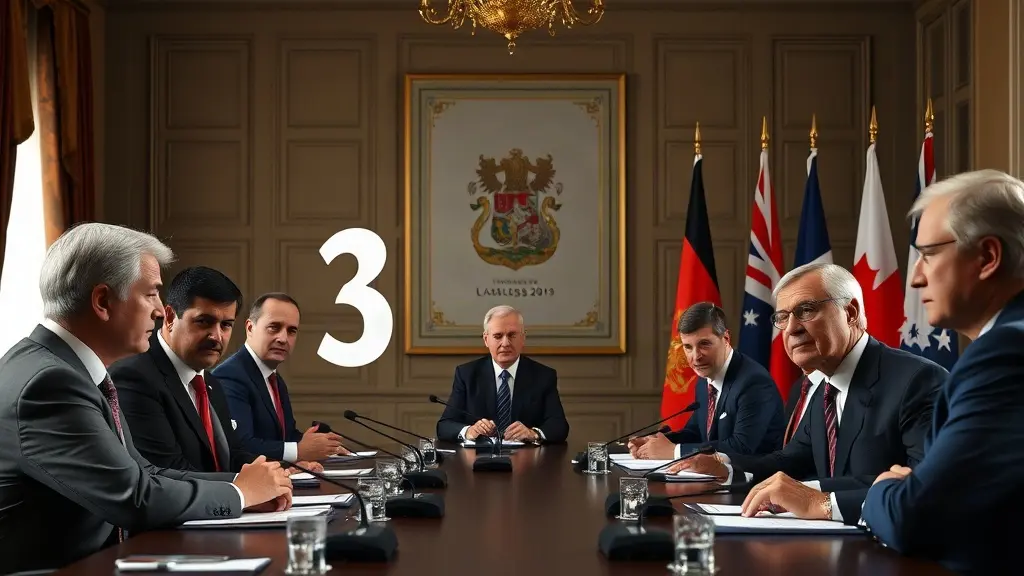
The G7 Foreign Ministers convened in Paris on November 9-10, 2026, under the French G7 Presidency, to address pressing global issues, particularly the ongoing conflict in Ukraine. The meeting brought together representatives from Canada, France, Germany, Italy, Japan, the United Kingdom, and the United States, along with the High Representative of the European Union. The ministers issued a joint declaration reaffirming their commitment to Ukraine's sovereignty and territorial integrity, amidst escalating tensions and military aggression from Russia.
Unwavering Support for Ukraine's Sovereignty
In their statement, the G7 Foreign Ministers expressed strong solidarity with the Ukrainian people, who continue to face daily assaults on their homes and infrastructure. They condemned the recent Russian attacks that have targeted civilian shipping in the Black Sea, which not only threaten Ukraine's security but also have far-reaching implications for global food security. The ministers emphasized the importance of safeguarding food supply chains, which have been severely disrupted by the ongoing conflict.
The G7 reaffirmed its commitment to supporting Ukraine's military capabilities, particularly in air defense systems and long-range capabilities. This support is crucial as Ukraine exercises its right to self-defense against ongoing aggression. The ministers highlighted the necessity of a comprehensive ceasefire, which includes a reciprocal halt to attacks on energy infrastructure, to protect civilians and stabilize global markets.
Addressing Ukraine's Financial Needs
Recognizing Ukraine's pressing financial requirements for 2027 and beyond, the G7 ministers discussed coordinated efforts to provide financial assistance. This support is vital for Ukraine to maintain its defense and rebuild its infrastructure, which has been devastated by the conflict. The ministers acknowledged the need for a unified approach to address these challenges, ensuring that Ukraine receives the necessary resources to navigate the difficult winter ahead.
Condemnation of Military Assistance to Russia
The G7 Foreign Ministers did not shy away from condemning the military assistance provided to Russia by countries such as North Korea and Iran. They denounced the provision of weapons and military training by these nations, which enables Russia to sustain its military operations against Ukraine. Additionally, the G7 expressed concern over China's role in supplying dual-use components that further complicate the situation.
The ministers reiterated their commitment to taking decisive action against these nations, emphasizing the need for a coordinated international response to counteract their support for Russia. This includes increasing pressure on Russia's war economy through targeted sanctions, which aim to disrupt the financial networks that sustain its military efforts.
Sanctions and Economic Pressure on Russia
Building on the consensus reached during the G7 Summit in Évian, the ministers discussed strategies to enhance sanctions against Russia. They reaffirmed their determination to focus on ships operating under false flags and the intermediaries that facilitate the circumvention of existing sanctions. This approach aims to dismantle the shadow fleet that has been utilized to transport oil and other resources, thereby undermining the effectiveness of international sanctions.
The G7 also committed to closely coordinating their efforts to ensure that sanctions are effectively implemented and enforced. This unified front is crucial in maintaining pressure on Russia and signaling to the international community that aggression will not be tolerated.
Commitment to Regional Security and Diplomatic Efforts
In addition to addressing the situation in Ukraine, the G7 Foreign Ministers discussed the broader implications of regional security, particularly concerning Iran. They commended the work of regional mediators and reiterated their support for diplomatic efforts aimed at resolving concerns over Iran's nuclear program. The ministers emphasized that Iran must never be allowed to develop or acquire nuclear weapons and urged the nation to cease its support for nonstate armed groups that contribute to regional instability.
The G7's commitment to a diplomatic solution underscores the importance of addressing the root causes of conflict and instability in the region. Absent a viable diplomatic resolution, the ministers pledged to continue their coordinated efforts to constrain Iran's capacity to sow discord.
Conclusion: A Unified G7 Response
The G7 Foreign Ministers' Meeting in Paris marks a significant step in the international community's response to the ongoing conflict in Ukraine and the broader geopolitical challenges posed by aggressive nations. By reaffirming their support for Ukraine and condemning military assistance to Russia, the G7 is sending a clear message of unity and resolve. The commitment to coordinated sanctions and financial support for Ukraine reflects a strategic approach to addressing the multifaceted challenges posed by the current geopolitical landscape.
As the situation continues to evolve, the G7's actions will be closely monitored, with the hope that their unified stance will contribute to a peaceful resolution and stability in the region.
| Forensic Metric / Statutory Dimension | Mainstream Wire Benchmark | DotMR Corroborated Record & Direct Impact |
|---|---|---|
| G7 Foreign Ministers Meeting Date | November 9-10, 2026 | Confirmed by official G7 statement |
| Support Pledged to Ukraine | Ongoing military aid | Commitment to air defense and financial support for winter 2027 |
| Sanctions Against Russia | Increased pressure | Focus on false flag operations and intermediaries |
| Iran's Nuclear Program Concerns | Diplomatic negotiations | G7's commitment to prevent nuclear development |
| Financial Aid for Ukraine | Coordinated support | Acknowledgment of pressing financing needs for 2027 and beyond |