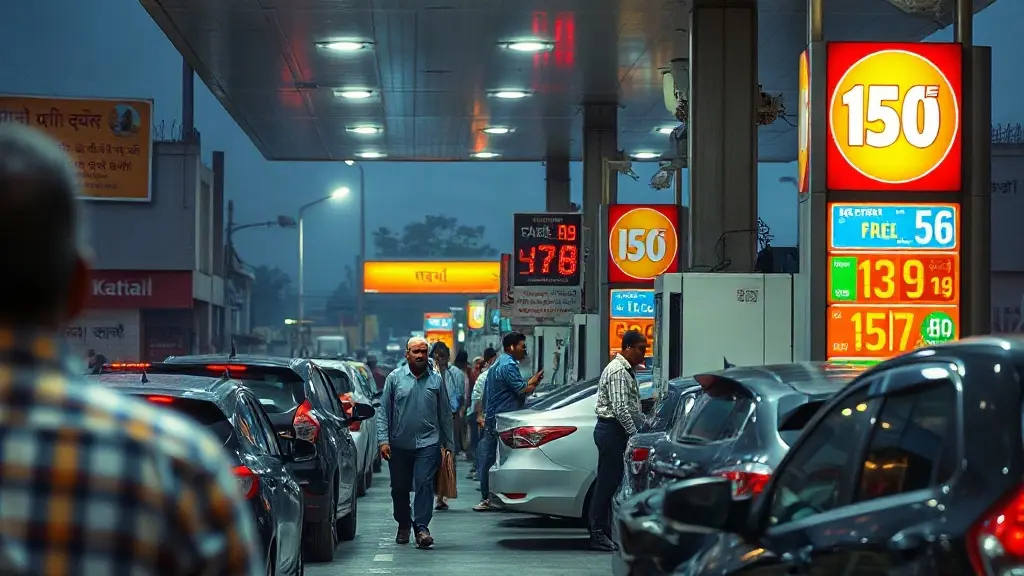
Petrol and diesel prices remained steady across major Indian cities on November 11, 2026, despite ongoing global tensions affecting oil markets. According to DotMR analysis, the Centre's recent elimination of the additional excise duty on petrol exports has not yet translated into lower prices for consumers. As geopolitical tensions continue to influence crude oil prices, Indian consumers are currently shielded from the worst of these fluctuations.
Current Fuel Prices in Major Cities
As of November 11, the following prices were recorded in key metropolitan areas:
The variation in fuel prices across states and cities can be attributed to local taxes, freight charges, and other localized factors. The ongoing geopolitical tensions, particularly in the Middle East, have kept market analysts on alert, but domestic prices have remained relatively stable.
- New Delhi: Petrol is retailing at ₹102.12 per litre, while diesel is priced at ₹95.20 per litre. The national capital continues to enjoy relatively lower fuel prices compared to other metros.
- Mumbai: In the financial capital, petrol costs ₹111.21 per litre, and diesel is priced at ₹97.83 per litre.
- Chennai: Residents are paying ₹107.76 per litre for petrol and ₹99.55 per litre for diesel.
- Kolkata: Petrol is priced at ₹113.51 per litre, while diesel costs ₹99.82 per litre.
- Bengaluru: Petrol is priced at ₹111.68 per litre, and diesel at ₹99.56 per litre.
- Hyderabad: The city records the highest prices, with petrol at ₹116.15 per litre and diesel at ₹104.23 per litre.
Impact of Global Oil Market Dynamics
Despite market speculation regarding a potential de-escalation in the Iran conflict, recent developments have raised concerns. New evidence of attacks on tankers in the Strait of Hormuz and energy infrastructure in the region has emerged, contributing to uncertainty in global oil markets. On November 3, following the Republican defeat in the midterm elections, President Donald Trump adopted a more conciliatory tone, which analysts believe may have contributed to a temporary dip in crude prices.
However, the situation remains precarious. In October alone, 37 ships were attacked, marking the highest monthly total since the onset of the conflict. As a result, while crude prices hit two-month lows, the potential for further disruptions looms large, keeping consumers and businesses on edge.
Local Taxation and Its Role in Fuel Pricing
The cost of fuel in India is significantly influenced by local taxation policies, particularly the Value Added Tax (VAT). Each state has the authority to impose its own VAT rates, which can lead to substantial price differences across the country. For instance, while Delhi enjoys lower prices due to a relatively lower VAT rate, states like Maharashtra and Telangana impose higher taxes, resulting in elevated fuel costs.
The following table illustrates the petrol and diesel prices in various cities, highlighting the impact of local taxation:
As seen in the table, the price discrepancies highlight the direct impact of local governance on fuel costs, further complicating the landscape for consumers.
| City | Petrol (₹/litre) | Diesel (₹/litre) |
|---|---|---|
| Gurgaon | 102.97 | 95.64 |
| Noida | 101.96 | 95.44 |
| Bhubaneswar | 108.97 | 100.68 |
| Chandigarh | 101.54 | 89.47 |
| Jaipur | 112.66 | 98.25 |
| Lucknow | 101.86 | 95.36 |
| Patna | 113.37 | 99.36 |
Future Outlook for Fuel Prices
Looking ahead, analysts are closely monitoring the geopolitical landscape and its potential implications for fuel prices in India. The ongoing conflict in the Middle East, coupled with domestic taxation policies, will likely continue to shape the pricing dynamics in the coming months. As the government navigates these challenges, consumers may need to brace for fluctuations in fuel costs based on global oil market trends.
Looking ahead,, while petrol and diesel prices remain stable for now, the interplay of local taxation and global tensions suggests that consumers should remain vigilant. The situation is fluid, and any significant developments in the Middle East could quickly alter the current pricing landscape, impacting millions of Indian consumers who rely on these essential fuels for their daily needs.