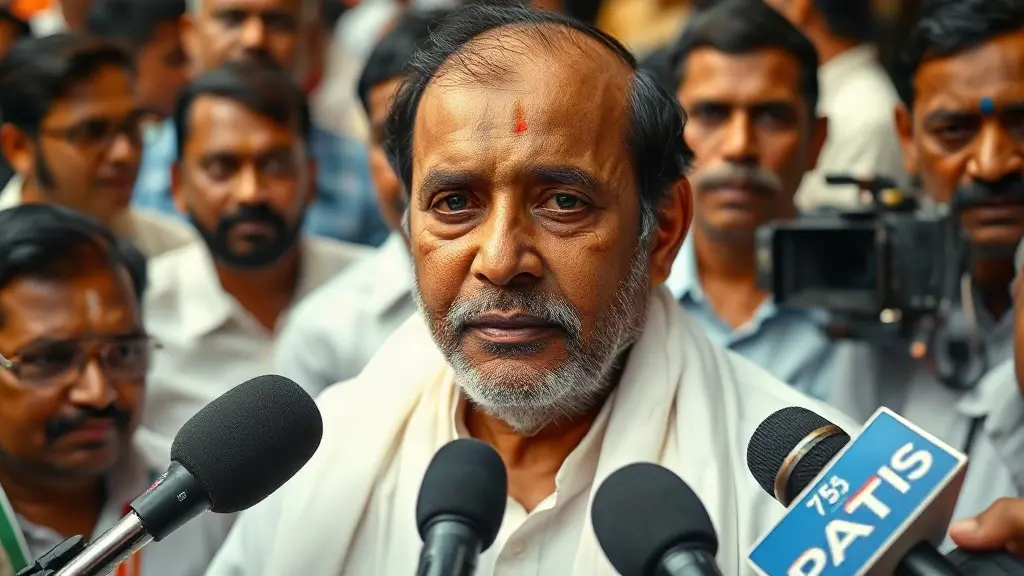
In a recent statement, Duraimurugan, the general secretary of the Dravida Munnetra Kazhagam (DMK), addressed the controversy surrounding his granddaughter's wedding, which was conducted with traditional Hindu rituals. This clarification comes after he faced criticism from various factions, including the Dravidar Kazhagam, for the choice of ceremony. The wedding, held on November 6, 2026, has sparked a debate on cultural practices and political implications in Tamil Nadu.
Context of the Wedding Ceremony
The wedding took place in Chennai and was marked by traditional Hindu customs, which has drawn ire from some political circles. Duraimurugan stated that the ceremony was organized entirely at the request of his granddaughter, who is educated abroad and expressed her desire to marry outside their caste. He emphasized that the decision was made in respect of her wishes, saying, "My granddaughter, educated overseas, shared with me that she was in love with an individual outside our caste and wished to marry him with traditional Hindu rituals."
Duraimurugan's remarks highlight the generational shift in attitudes towards marriage and cultural practices, particularly among the youth in Tamil Nadu. The DMK leader's decision to honor his granddaughter's wishes reflects a broader acceptance of inter-caste marriages, which have historically been contentious in Indian society.
Political Reactions and Backlash
The backlash against Duraimurugan's decision has been swift, particularly from the Dravidar Kazhagam and its affiliates. Critics argue that the DMK leader's actions contradict the party's long-standing stance against caste-based practices. The Dravidar Kazhagam, founded by E.V. Ramasamy (Periyar), has been vocal in its opposition to caste discrimination and has called for a more progressive approach to marriage and social customs.
In response to the criticism, Duraimurugan expressed his regret over the situation, urging that the wedding should not become a political issue. He stated, "I express my regret over this development and request everyone not to make it a political issue or a subject of debate." This plea underscores the tension between personal choices and political ideologies in contemporary Tamil Nadu.
Cultural Significance of Hindu Rituals
Hindu wedding rituals are steeped in tradition and vary significantly across regions and communities. In Tamil Nadu, these ceremonies often involve elaborate customs that symbolize the union of two families. Duraimurugan's granddaughter's choice to incorporate these rituals reflects a desire to honor cultural heritage, even as she navigates modern relationships.
The wedding ceremony included several traditional elements, such as the 'Kashi Yatra,' where the groom symbolically leaves his home to seek knowledge and wisdom, and the 'Saptapadi,' where the couple takes seven steps together, each representing a vow. These rituals are not just ceremonial but are imbued with deep cultural significance, representing the values and beliefs of the Hindu community.
The Broader Implications for DMK and Tamil Nadu Politics
Duraimurugan's situation raises questions about the DMK's position on caste and marriage in a rapidly changing society. The party has historically championed social justice and equality, yet this incident reveals the complexities of navigating personal beliefs within a political framework. As Tamil Nadu continues to evolve, the DMK may need to reassess its stance on caste and cultural practices to align with the changing sentiments of its constituents.
The incident also highlights the generational divide in attitudes towards marriage and caste. Younger individuals, like Duraimurugan's granddaughter, are increasingly advocating for personal choice and love over traditional constraints. This shift could signal a broader change in societal norms, challenging established political narratives and prompting parties like the DMK to adapt.
Conclusion: A Call for Understanding
As the controversy unfolds, it is essential to approach the issue with sensitivity and understanding. Duraimurugan's defense of his granddaughter's wedding is not merely a personal matter; it reflects the ongoing struggle between tradition and modernity in Tamil Nadu. The DMK leader's plea for the wedding not to be politicized is a call for compassion and respect for individual choices in a society that is still grappling with the implications of caste and cultural identity.
In a state where political narratives often intertwine with personal lives, Duraimurugan's situation serves as a reminder of the complexities inherent in balancing tradition with contemporary values. As Tamil Nadu moves forward, the dialogue surrounding caste, marriage, and cultural practices will undoubtedly continue to evolve, shaping the future of its political landscape.
| Date | Event | Key Figures | Location | Outcome |
|---|---|---|---|---|
| 2026-11-06 | Duraimurugan's granddaughter's wedding | Duraimurugan | Chennai | Controversy over rituals |
| Calls for political neutrality |