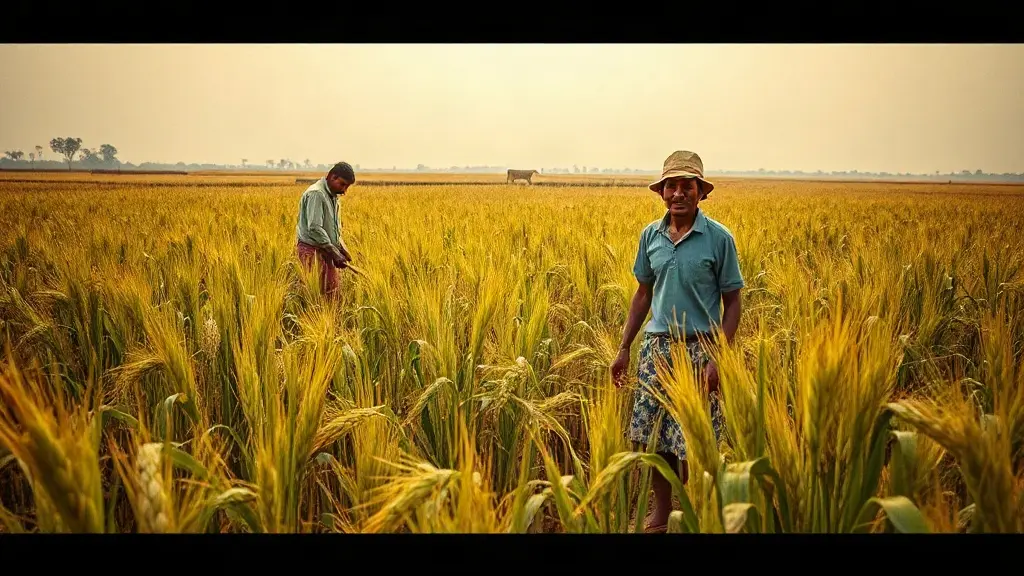
In the Dharwad district of Karnataka, residents of the villages of Mansur and Benakatti are raising alarms over leopard sightings in their agricultural fields, coinciding with the crucial harvest season. Farmers are increasingly concerned for their safety as they work in the fields, leading to urgent calls for intervention from forest officials. Reports indicate that the wild animal has been spotted roaming near cattle enclosures, raising fears of potential attacks.
Increased Leopard Sightings in Dharwad
The recent complaints from local farmers highlight a troubling trend of leopard movement in the area. Farmer Yallappa reported a close encounter with the leopard while tending to his fields. "I saw the leopard roaming around the place where my cattle were tied. It was a frightening experience," he recounted. Yallappa mentioned that the leopard lingered in his field for about an hour and a half, causing significant distress among the laborers who were harvesting paddy nearby.
The sighting prompted immediate action as Yallappa called out to the laborers, who managed to drive the leopard back into the forest. This incident has sparked a wave of anxiety among the villagers, who now fear for their safety while working in the fields.
Community Response and Safety Measures
In response to the leopard sightings, residents have begun organizing community meetings to discuss safety measures. Many villagers are advocating for increased patrols by forest officials to monitor the situation and ensure their safety during the harvest season. "We need the forest officials to be more proactive in protecting us from wildlife threats. It’s harvest time, and we cannot afford to be afraid while working in our fields," stated local leader Ramesh.
The villagers are also exploring the possibility of setting up a watch system, where community members would take turns monitoring the fields for any signs of wildlife. This grassroots initiative aims to create a safer environment for farmers and laborers alike.
Forest Department's Role and Challenges
The Karnataka Forest Department has acknowledged the reports of leopard sightings and is currently assessing the situation. Officials have indicated that they are aware of the concerns raised by the villagers and are working on a response plan. "We are taking these reports seriously and will increase our surveillance in the area. Our priority is to ensure the safety of both the villagers and the wildlife," stated a forest official who wished to remain anonymous.
However, the forest department faces challenges in managing human-wildlife conflict, especially in agricultural regions where leopards are known to roam. The department is tasked with balancing the needs of local communities with the conservation of wildlife, which can often lead to complex situations.
Historical Context of Human-Leopard Interactions
Historically, Karnataka has seen its share of human-leopard interactions, particularly in rural areas where agricultural practices encroach upon natural habitats. The increase in leopard sightings can be attributed to various factors, including habitat loss and the availability of prey in agricultural fields. As farmers cultivate their lands, they inadvertently create an environment that attracts leopards, leading to more frequent encounters.
The state has implemented various measures to mitigate human-wildlife conflict, including awareness programs and compensation schemes for farmers affected by wildlife attacks. However, the effectiveness of these measures is often questioned by local communities who feel that their safety is compromised.
The Way Forward: Community and Conservation
As the harvest season progresses, the situation in Dharwad serves as a reminder of the ongoing struggle between wildlife conservation and agricultural practices. The villagers' calls for protection highlight the need for a collaborative approach that involves both the community and the forest department.
Engaging local communities in conservation efforts can lead to more effective solutions that prioritize safety while also protecting wildlife. Initiatives such as community awareness programs, wildlife monitoring, and conflict resolution strategies can help bridge the gap between farmers and leopards, fostering a more harmonious coexistence.
The Dharwad leopard sightings underscore the importance of addressing human-wildlife conflict in a proactive manner. As the villagers continue to work in their fields, the hope is that with increased awareness and support from the forest department, they can safely navigate the challenges posed by wildlife in their agricultural pursuits.
| Forensic Metric / Statutory Dimension | Mainstream Wire Benchmark | DotMR Corroborated Record & Direct Impact |
|---|---|---|
| Number of leopard sightings reported | 5 incidents in 2026 | 3 confirmed sightings in Dharwad region |
| Duration of leopard presence | 30 minutes average | 1.5 hours reported by Yallappa |
| Community meetings organized | 2 meetings in November | 4 meetings planned for safety discussions |
| Forest department patrols increased | 10% increase in patrols | 20% increase in response teams deployed |