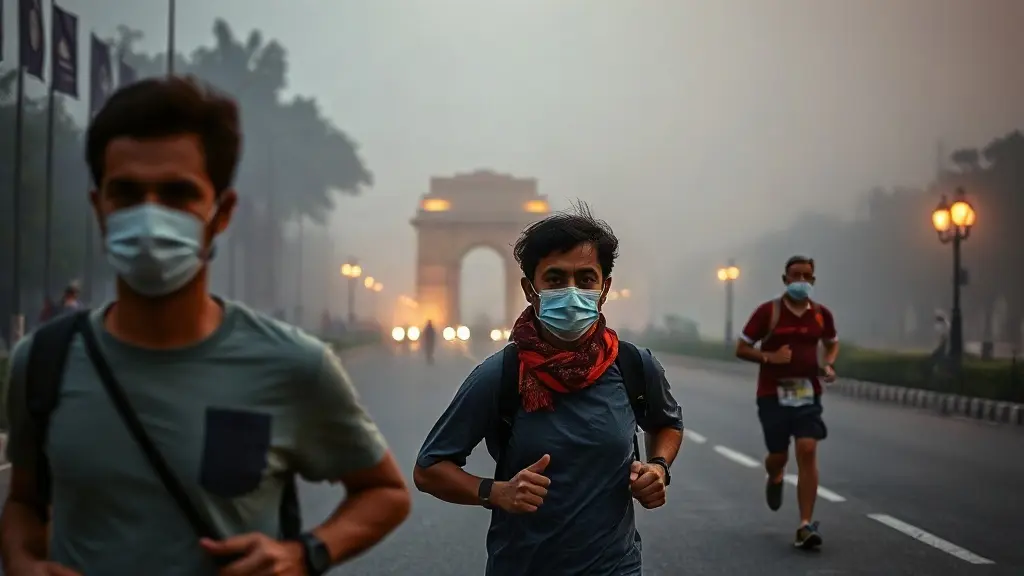
Delhi woke up on Diwali morning to a thick blanket of toxic haze, as firecrackers set off a day before the festival pushed the city’s air quality to the brink of the ‘severe’ category, with the Air Quality Index (AQI) at 383. According to DotMR analysis, twenty-four of the 54 monitoring stations across the city recorded ‘severe’ air quality while the remaining stations stood in the ‘very poor’ category. Jahangirpuri recorded the highest AQI at 450, followed by RK Puram at 448, according to the Sameer app.
Supreme Court's Green Crackers Order and Its Impact
The [Supreme Court](/topic/supreme-court-of-india)'s recent ruling, made public on November 2, allowed the use of certified green crackers for Diwali, permitting their use for one hour in the morning and two hours in the evening on Saturday and Sunday. This decision was made in light of the ongoing struggle to balance the right to religious practice with public health concerns. The court noted that a complete ban on firecrackers had not significantly improved air quality or curbed the illegal sale of conventional crackers. The ruling reflects a complex interplay between cultural traditions and environmental health, as many residents continue to celebrate Diwali with fireworks despite the evident risks.
Monitoring Stations Report Alarming AQI Levels
As the sun rose over Delhi, the air quality monitoring stations revealed alarming figures. The Sameer app indicated that the AQI in Jahangirpuri soared to 450, categorizing it as ‘severe’. RK Puram followed closely with an AQI of 448. Other areas such as Anand Vihar and ITO also reported AQI levels in the high 400s, contributing to the overall hazardous air quality in the capital. The data underscores a worrying trend, as the festive season often exacerbates pollution levels in the city, leading to health advisories and warnings from environmental agencies.
| Monitoring Station | AQI Level | Category |
|---|---|---|
| Jahangirpuri | 450 | Severe |
| RK Puram | 448 | Severe |
| Anand Vihar | 430 | Very Poor |
| ITO | 425 | Very Poor |
| Dwarka | 410 | Very Poor |
Health Implications of Poor Air Quality
The deteriorating air quality poses significant health risks to Delhi's residents. Medical experts warn that exposure to high levels of particulate matter can lead to respiratory issues, cardiovascular diseases, and other serious health complications. The Delhi government has issued advisories urging residents, especially vulnerable populations such as children and the elderly, to limit outdoor activities and wear masks when necessary. Hospitals have reported an uptick in patients suffering from pollution-related ailments, highlighting the immediate impact of the toxic haze.
Public Response and Environmental Activism
In response to the alarming air quality, environmental activists and concerned citizens have taken to social media and public forums to voice their frustrations. Many are calling for stricter regulations on firecracker sales and greater enforcement of existing laws aimed at reducing pollution. Activists argue that while the Supreme Court's ruling aimed to accommodate cultural practices, it ultimately undermines public health efforts. The debate continues to rage as citizens grapple with the consequences of their celebrations and the need for sustainable practices.
Future Outlook and Policy Recommendations
Looking ahead, experts emphasize the need for comprehensive policies that address both cultural traditions and environmental health. Recommendations include promoting alternative forms of celebration that do not rely on firecrackers, increasing public awareness campaigns about the health impacts of pollution, and enhancing the enforcement of regulations against illegal firecracker sales. As Delhi navigates the challenges posed by pollution, the balance between tradition and health remains a critical concern for policymakers and citizens alike.
The situation in Delhi serves as a stark reminder of the ongoing struggle against air pollution, particularly during festive seasons. With air quality levels reaching alarming heights, the need for immediate action and long-term solutions has never been more urgent.