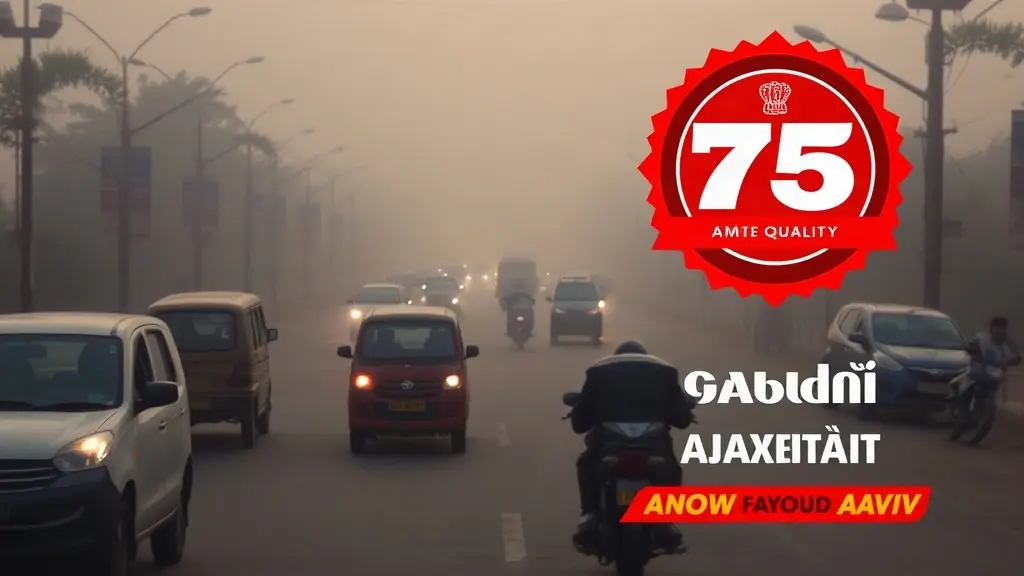
Delhi's air quality has plunged into the 'very poor' category, recording an average Air Quality Index (AQI) of 376 on November 8, 2026. This alarming figure comes just ahead of Diwali celebrations, when air quality is expected to worsen significantly due to firecracker emissions and other pollutants. The Central Pollution Control Board (CPCB) reported that out of 59 monitoring stations, 12 recorded 'severe' air quality levels, while 22 stations fell into the 'very poor' category. The worst AQI was noted in Jahangirpuri, reaching a staggering 463.
Current Air Quality Status and Forecast
The average AQI in Delhi has seen a concerning increase from 369 on Saturday to 376 on Sunday, remaining perilously close to the 'severe' threshold of 400. The CPCB categorizes air quality as follows: 0-50 is 'good', 51-100 is 'satisfactory', 101-200 is 'moderate', 201-300 is 'poor', 301-400 is 'very poor', and 401-500 is 'severe'. With the current trajectory, experts predict that air quality will deteriorate further, potentially remaining in the 'severe' category for several days following Diwali.
The Air Quality Early Warning System (EWS) for Delhi has indicated that the combination of vehicular emissions, the peak stubble-burning season, and the anticipated increase in firecracker usage will exacerbate the pollution crisis. The EWS has also noted that meteorological conditions are currently unfavorable for the dispersion of pollutants, which is critical in managing air quality.
Contributing Factors to Poor Air Quality
Several factors are contributing to the current air quality crisis in Delhi. The primary pollutant, PM2.5, has seen a significant rise, with emissions from firecrackers expected to add to the already high levels of particulate matter in the air. According to the Decision Support System (DSS) for Delhi, the transport sector is projected to be the largest contributor to pollution on Sunday, accounting for approximately 19% of the total emissions. Stubble burning, while a smaller contributor at 3.5%, is also expected to impact air quality significantly in the coming days.
Weather experts have pointed out that the ventilation index is currently below 6,000 square meters per second, and the average wind speed is less than 10 kilometers per hour. These conditions hinder the effective dispersion of pollutants, trapping them close to the ground and leading to higher concentrations in the air.
Public Health Implications
The deteriorating air quality poses serious health risks for Delhi's residents. Exposure to high levels of PM2.5 can lead to respiratory issues, cardiovascular diseases, and other health complications. Vulnerable populations, including children, the elderly, and those with pre-existing health conditions, are particularly at risk. Health officials are urging residents to take precautions, such as wearing masks and limiting outdoor activities, especially during peak pollution hours.
The government has also been urged to implement stricter regulations on vehicular emissions and to promote public awareness campaigns about the dangers of firecracker usage during Diwali. The anticipated spike in pollution levels post-Diwali could lead to a public health crisis if immediate action is not taken.
Government Response and Future Measures
In light of the current air quality crisis, the Delhi government is under pressure to take decisive action. Authorities are considering measures such as banning firecrackers, increasing public transport options, and enhancing monitoring of pollution sources. Additionally, there are calls for better coordination with neighboring states to address the issue of stubble burning, which significantly contributes to the region's air quality problems.
The government has also been urged to invest in long-term solutions, such as green infrastructure and sustainable urban planning, to mitigate the impact of pollution in the future. As the city braces for the upcoming Diwali celebrations, the focus remains on balancing cultural practices with the urgent need for public health and environmental protection.
As Delhi prepares for Diwali, the air quality crisis serves as a stark reminder of the challenges facing urban centers in managing pollution and protecting public health. Without immediate and effective measures, the city risks entering a prolonged period of hazardous air quality, impacting the lives of millions.
| Monitoring Station | AQI Level | Category |
|---|---|---|
| Jahangirpuri | 463 | Severe |
| Other Stations | 376 | Very Poor |
| Total Monitored | 59 | - |