In a significant escalation of political tensions, K.C. Venugopal, the All India Congress Committee (AICC) general secretary, reaffirmed that the Congress-led agitation against Chief Election Commissioner (CEC) Gyanesh Kumar will persist until he is removed from office. Venugopal's statements, made during a press conference in Alappuzha on November 8, 2026, highlight the party's commitment to reforming India's electoral system to ensure it is impartial and transparent.
Context of the Agitation Against Gyanesh Kumar
The agitation against Gyanesh Kumar has gained momentum in recent weeks, with protests erupting across various states and districts. Venugopal emphasized that the Congress party's demands are rooted in a broader call for electoral integrity, stating, "We will withdraw from this agitation only after Gyanesh Kumar is removed from the post and steps are taken to make India's electoral system and processes flawless, impartial, and fair."
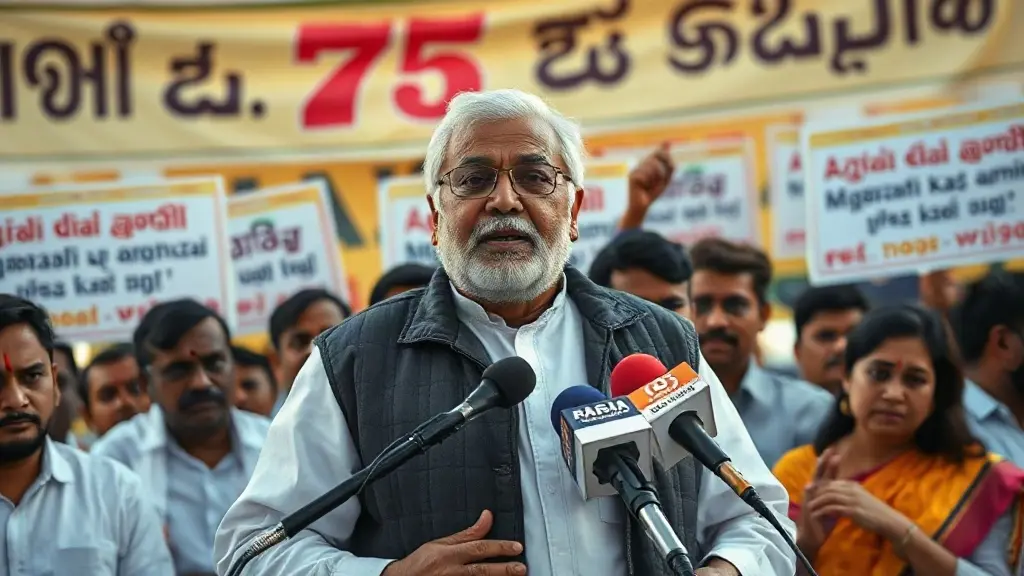
The protests have been characterized by a series of rallies, sit-ins, and public demonstrations, drawing attention to perceived flaws in the electoral process under Kumar's leadership. The Congress party argues that the current electoral framework lacks the necessary safeguards to ensure free and fair elections, which are fundamental to a functioning democracy.
Protests and Public Sentiment
The ongoing protests have seen participation from various segments of society, including students, activists, and political leaders. Reports indicate that the agitation has been particularly strong in states such as Kerala, Karnataka, and Maharashtra, where large crowds have gathered to voice their dissent.
Venugopal noted that while there may be a brief pause in protests during the Deepavali festival, the momentum will resume immediately afterward. "Our resolve is strong, and we will not back down until our demands are met," he asserted, reflecting the party's determination to maintain pressure on the Election Commission.
Electoral Reforms: A Central Demand
At the heart of the agitation lies a demand for comprehensive electoral reforms. The Congress party has outlined several key areas where it believes improvements are necessary:
1. Voter Registration: Streamlining the voter registration process to ensure that all eligible citizens can easily register and participate in elections.
2. Transparency in Funding: Implementing stricter regulations on political funding to prevent corruption and ensure that all campaign contributions are disclosed.
3. Election Monitoring: Establishing independent bodies to oversee elections and ensure that they are conducted fairly and transparently.
4. Technology in Voting: Upgrading voting technology to enhance security and reliability, including the use of biometric identification and secure electronic voting machines.
These reforms are seen as essential to restoring public confidence in the electoral process, which has been eroded in recent years due to allegations of bias and manipulation.
Political Implications and Future Outlook
The agitation against Gyanesh Kumar is not only a reflection of the Congress party's internal dynamics but also indicative of broader political currents in India. As the country approaches crucial state and national elections, the demand for electoral reforms is likely to resonate with a significant portion of the electorate.
Political analysts suggest that the Congress party's stance could galvanize support from disenchanted voters who feel that their voices are not being heard. However, the ruling party has dismissed the protests as politically motivated, accusing the Congress of attempting to undermine the integrity of the Election Commission.
As the situation unfolds, the potential for increased political polarization remains high. The Congress party's strategy appears to be aimed at positioning itself as the champion of electoral integrity, contrasting with the ruling party's narrative.
Conclusion: A Call for Accountability
The ongoing agitation against CEC Gyanesh Kumar underscores a critical moment in India's democratic journey. As K.C. Venugopal and the Congress party continue to rally support for their cause, the demand for electoral reforms resonates with a public increasingly aware of the importance of transparency and fairness in governance.
The coming weeks will be pivotal as the protests continue and the political landscape evolves. Whether the Congress party can translate this agitation into tangible electoral gains remains to be seen, but their commitment to reforming India's electoral system is clear.
| Key Metrics | Details |
|---|---|
| Date of Protest Start | October 2026 |
| Number of States Involved | 5 |
| Estimated Protesters Nationwide | 50,000+ |
| Key Demand | Removal of Gyanesh Kumar and electoral reforms |
| Next Major Event | Resumption of protests post-Deepavali |