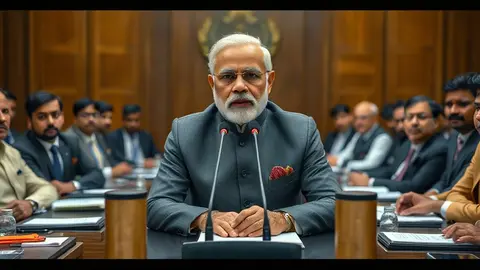
The [Union Cabinet](/topic/union-cabinet), chaired by the [Prime Minister](/prime-minister-celebrates-crpfs-historic-zero-casualty-milestone-3), has approved the continuation of the Centrally Sponsored Scheme (CSS) for Fast Track Special Courts (FTSCs), which includes exclusive POCSO Courts, for an additional five years, from April 1, 2026, to March 31, 2031. This decision, announced on November 4, 2026, comes with a substantial financial outlay of Rs.3,788.04 crore, comprising a Central Share of Rs.2,353.15 crore and a State/UT Share of Rs.1,434.89 crore, funded through the Nirbhaya Fund.
Objectives and Implementation of the FTSC Scheme
The primary aim of the FTSC Scheme is to ensure the expeditious trial of cases related to rape and the Protection of Children from Sexual Offences (POCSO) Act. The scheme is designed to address the backlog of cases and provide timely justice to victims, particularly women and children. The Department of Justice will implement the scheme in coordination with respective State Governments and Union Territory (UT) Administrations.
The continuation of the FTSC Scheme is expected to significantly impact the judicial landscape by expanding the number of functional courts. The proposal includes increasing the number of FTSCs to 850, targeting districts with a high pendency of rape and POCSO cases. This expansion is crucial as it aims to reduce the backlog of cases and enhance the efficiency of the judicial process.
Historical Context and Previous Extensions
The FTSC Scheme was initially launched on October 2, 2019, following the Criminal Law (Amendment) Act of 2018 and the directives from the [Supreme Court of India](/topic/supreme-court-of-india). The Supreme Court had mandated the establishment of exclusive Special Courts in districts with over 100 pending POCSO cases. The scheme has undergone several extensions, with the most recent one set to expire on March 31, 2026. The current approval ensures its continuity for another five years, reflecting the government's commitment to addressing sexual offences with urgency and seriousness.
Since its inception, the FTSC Scheme has made significant strides in the judicial response to sexual offences. As of now, there are 779 functional FTSCs, including 399 exclusive POCSO Courts, which have collectively disposed of 402,457 cases. This impressive figure underscores the effectiveness of the scheme in delivering justice to victims and highlights the need for its continuation.
Financial Implications and Resource Allocation
The financial outlay of Rs.3,788.04 crore for the extended period will be allocated to enhance the infrastructure and operational capabilities of the FTSCs. The Central Share of Rs.2,353.15 crore will be drawn from the Nirbhaya Fund, which is specifically earmarked for initiatives aimed at improving the safety and security of women and children in India.
The allocation of funds will not only support the establishment of additional FTSCs but also ensure that existing courts are adequately resourced to handle the increasing number of cases. This financial commitment is vital for maintaining the momentum of judicial reforms aimed at expediting the trial process for sexual offences.
Monitoring and Future Prospects
The Department of Justice will continue to monitor the functioning of the FTSCs through the FTSC Dashboard, which tracks performance metrics and case disposal rates. Regular data collection from High Courts and review meetings with stakeholders will ensure that the scheme remains effective and responsive to the needs of victims.
The continuation of the FTSC Scheme for another five years is expected to further strengthen the institutional capacity of the judiciary, reduce the pendency of sexual offence cases, and ensure timely justice for victims, particularly women and children. As the scheme evolves, it will be crucial to assess its impact on the judicial system and make necessary adjustments to enhance its effectiveness.
The FTSC Scheme represents a significant step towards improving the judicial response to sexual offences in India. By providing dedicated courts for the swift disposal of cases, the government aims to foster a safer environment for women and children, reinforcing the message that such crimes will not be tolerated.
| Date of Launch | Participating States/UTs | Total Functional FTSCs | Total Cases Disposed | Proposed FTSCs | Approved Continuation Period |
|---|---|---|---|---|---|
| 02.10.2019 | 29 | 779 | 402,457 | 850 | 31.03.2031 |