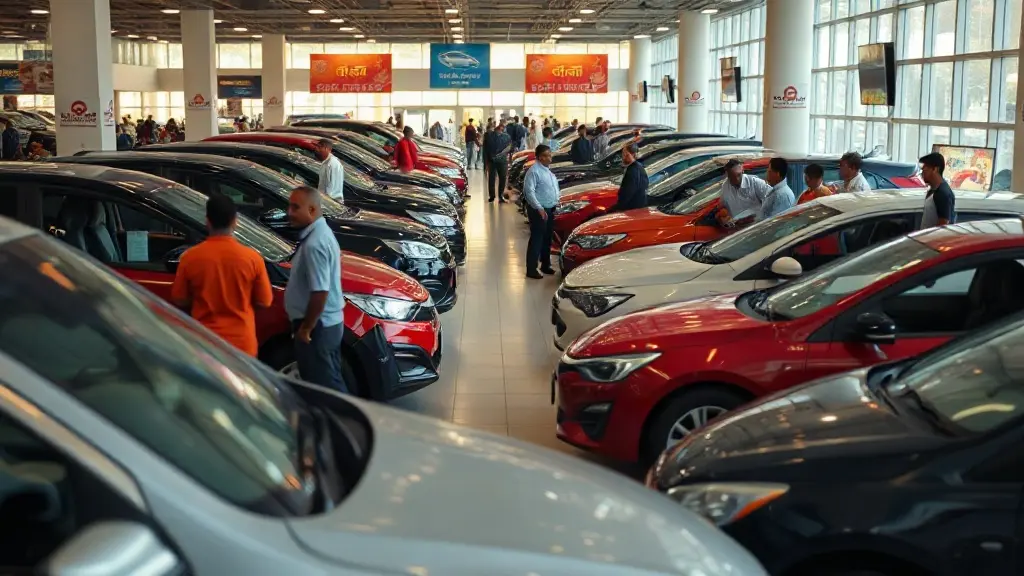
Total vehicle retail sales in October 2026 fell 24% Year on Year (YoY) to 3,172,466 units due to a high base effect from the previous year, according to data released by the Federation of Automobile Dealers Association (FADA). This significant decline reflects the challenges faced by the automobile sector, particularly in the two-wheeler and passenger vehicle segments, which saw declines of 28.35% and 14.23%, respectively. Despite this downturn, retail sales showed a positive trend compared to September 2026, growing by 25.05%.
Impact of High Base Effect on Sales Figures
The high base effect refers to the comparison of current sales figures against an unusually strong performance from the previous year. In October 2025, the automobile sector experienced a surge in sales, which has made the current year's figures appear significantly lower. FADA's data indicates that the two-wheeler segment, which is crucial for the Indian market, faced the most substantial decline, with sales dropping to 1,570,000 units from 2,190,000 units in October 2025. This decline can be attributed to various factors, including changing consumer preferences and economic conditions.
Segment-Specific Performance Analysis
The passenger vehicle segment also reported a notable decline, with sales falling to 300,000 units compared to 350,000 units in the same month last year. The decline in these segments highlights the ongoing challenges faced by manufacturers and dealers in adapting to market demands. According to FADA, the overall decline in sales was not unexpected given the extraordinary performance of the previous year.
| Segment | October 2025 Sales | October 2026 Sales | YoY Change (%) |
|---|---|---|---|
| Total Vehicles | 4,174,000 | 3,172,466 | -24% |
| Two-Wheelers | 2,190,000 | 1,570,000 | -28.35% |
| Passenger Vehicles | 350,000 | 300,000 | -14.23% |
Seasonal Trends and Consumer Behavior
The October sales figures also reflect seasonal trends in the automobile market. Traditionally, the festival season in India, which peaks in October, tends to boost sales. However, this year, the high base effect overshadowed the seasonal uptick. Dealers reported that while there was a surge in inquiries, actual purchases did not meet expectations.
"Consumers are cautious this year, and many are opting to wait for better deals or new models rather than making immediate purchases," said a dealer from Mumbai. This sentiment is echoed across the country, as buyers reassess their financial commitments amid rising interest rates and inflation.
Future Outlook for the Automobile Sector
Looking ahead, the automobile sector is expected to navigate a challenging landscape. Analysts predict that while the high base effect will continue to impact YoY comparisons in the coming months, the market may stabilize as manufacturers introduce new models and features that cater to evolving consumer preferences.
FADA's president emphasized the need for manufacturers to innovate and adapt to changing market dynamics. "The focus should be on enhancing customer experience and providing value-added services to regain consumer confidence," he stated.
As the year progresses, the automobile industry will be closely monitored for signs of recovery. The upcoming months will be crucial as manufacturers and dealers strategize to boost sales and overcome the hurdles posed by the current economic climate.
Conclusion: Navigating Challenges Ahead
In summary, the 24% decline in automobile retail sales in October 2026 highlights the impact of a high base effect and changing consumer behavior. While the sector faces significant challenges, the potential for recovery remains as manufacturers adapt to market demands. The coming months will be critical for the industry as it seeks to regain momentum and restore consumer confidence.