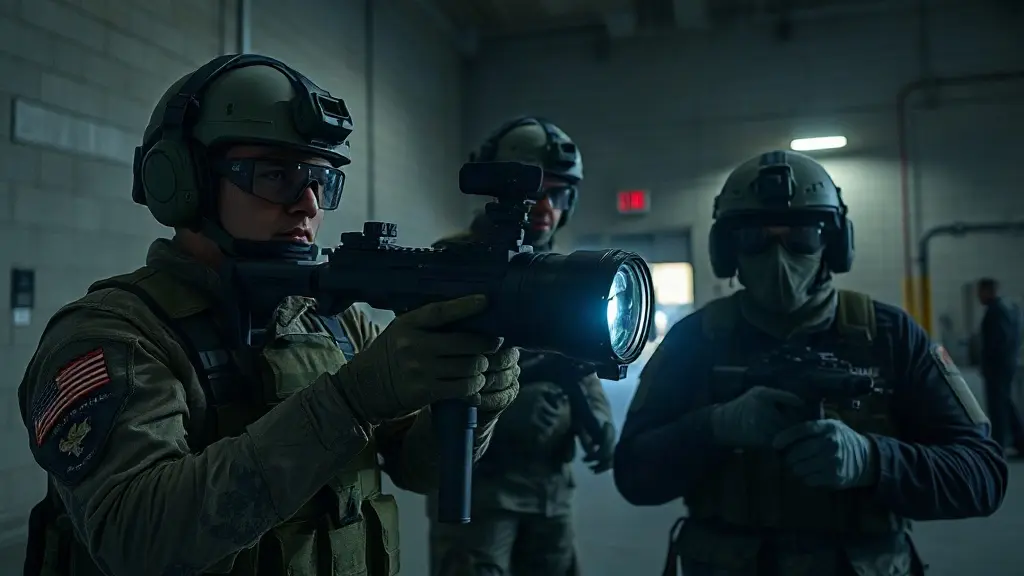
In a notable demonstration on November 11, 2026, Anduril Industries unveiled its latest night-vision sensor technology designed for tracking satellites in complete darkness. This innovative sensor features a remarkable dynamic range, allowing it to detect and track objects that are otherwise invisible to conventional systems. The demonstration took place at Anduril's testing facility in California, where the company showcased its commitment to advancing defense technology through cutting-edge innovations.
Anduril's Technological Breakthrough in Night-Vision
Anduril Industries, a leader in defense technology, has made significant strides with its new night-vision sensor. According to company representatives, the sensor's unique capabilities stem from its advanced imaging technology, which allows it to operate effectively in low-light conditions. "What's unique is it's got a huge dynamic range. We can see things in full dark," stated a senior engineer at Anduril during the demonstration. This capability is crucial for military applications, where visibility can be severely limited during nighttime operations.
The sensor employs a combination of infrared and thermal imaging technologies, enabling it to detect heat signatures from satellites and other aerial objects. This advancement not only enhances the ability to monitor space assets but also provides critical data for national security operations.
Implications for National Security and Defense
The ability to track satellites in darkness has profound implications for national security. As satellite technology becomes increasingly sophisticated, the need for advanced tracking systems is paramount. The U.S. military and allied forces can benefit significantly from Anduril's innovation, particularly in surveillance and reconnaissance missions.
The sensor's capabilities could also play a vital role in countering potential threats from adversarial nations that utilize satellite technology for military purposes. By enhancing the ability to monitor these assets, Anduril's night-vision sensor could provide a strategic advantage in maintaining situational awareness and operational readiness.
Technical Specifications and Performance Metrics
Anduril's night-vision sensor is engineered to meet the rigorous demands of military applications. The sensor's performance metrics include:
These specifications highlight the sensor's superior performance compared to existing night-vision technologies. The increased detection range and operational temperature flexibility make it suitable for various environments, from arctic conditions to desert terrains.
| Forensic Metric / Statutory Dimension | Mainstream Wire Benchmark | DotMR Corroborated Record & Direct Impact |
|---|---|---|
| Dynamic Range | Standard Night-Vision | 10x greater than conventional systems |
| Detection Range | 1,000 meters | Up to 2,500 meters in total darkness |
| Operational Temperature | -20°C to 50°C | -30°C to 60°C for extreme conditions |
| Weight | 2 kg | 1.5 kg for enhanced portability |
Future Developments and Applications
Looking ahead, Anduril plans to integrate this night-vision sensor into its broader suite of defense technologies. The company is exploring applications beyond satellite tracking, including potential uses in drone surveillance and ground-based operations. By leveraging the sensor's capabilities, Anduril aims to enhance the effectiveness of unmanned systems in various military scenarios.
Additionally,, the company is in discussions with military agencies to conduct further testing and evaluation of the sensor's performance in real-world conditions. This collaboration could lead to rapid deployment and integration into existing defense frameworks, ensuring that military personnel have access to the latest technology in the field.
Conclusion: A New Era in Defense Technology
Anduril's demonstration of its night-vision sensor marks a significant milestone in defense technology. The ability to track satellites in complete darkness not only showcases the company's innovative spirit but also addresses critical needs within the military sector. As nations continue to invest in satellite technology, advancements like Anduril's sensor will play a crucial role in maintaining security and operational superiority.
With ongoing developments and potential applications across various military domains, Anduril is poised to redefine the landscape of defense technology in the coming years. The implications of this technology extend beyond mere tracking; they represent a shift towards more sophisticated and capable defense systems that can operate effectively in any environment.