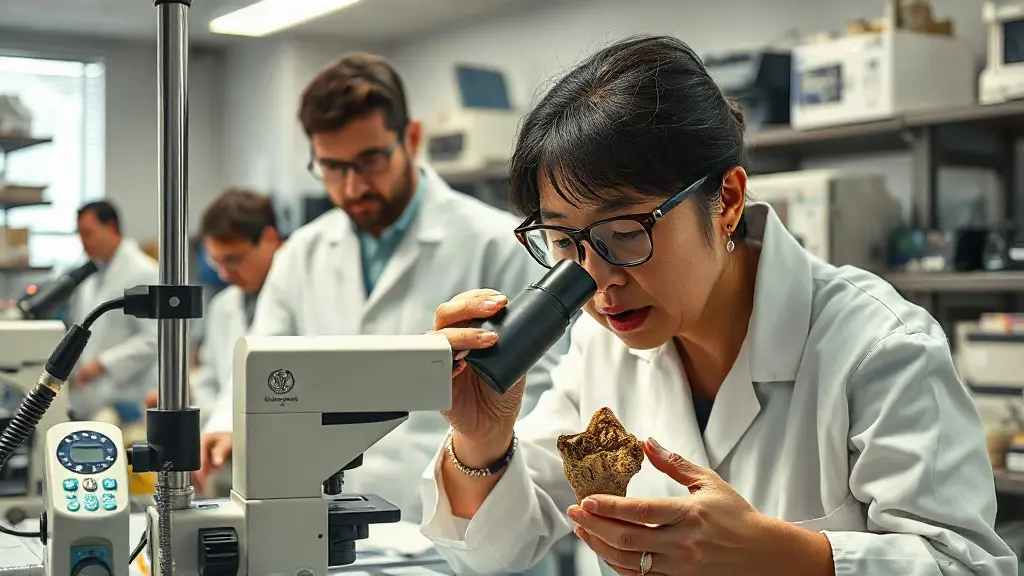
A groundbreaking study published by researchers from the Chinese Academy of Sciences has unveiled a remarkable twist in the story of human evolution. By analyzing 400,000-year-old teeth from the ancient species Homo erectus, scientists have discovered evidence of interbreeding between Homo erectus and Denisovans, a mysterious group of archaic humans. This revelation not only challenges long-held beliefs about human ancestry but also suggests that genetic traces of these ancient interactions persist in modern populations across Southeast Asia.
The Discovery of Ancient Teeth
The teeth in question were excavated from three significant archaeological sites in China: Zhoukoudian, Hexian, and Sunjiadong. These sites, dating back approximately 400,000 years, are crucial in understanding the migration and evolution of early human species. The research team, led by Qiaomei Fu, focused on extracting proteins from the enamel of six teeth, a method that has proven effective in recovering biological information from fossils that are too old for DNA analysis.
Tooth enamel, the hardest tissue in the human body, retains proteins long after DNA has degraded, allowing scientists to glean insights into the genetic makeup of ancient populations. The findings from this study have profound implications for our understanding of human evolution.
A New Perspective on Human Ancestry
For much of the 20th century, the prevailing model of human evolution resembled a tree, with distinct branches representing various hominin species. Homo sapiens was thought to have emerged in Africa and subsequently displaced other archaic humans, such as Neanderthals and Homo erectus, which were deemed evolutionary dead ends. However, this simplistic narrative has been increasingly challenged by recent genetic studies.
The analysis of the ancient teeth revealed a previously unknown amino acid variant shared among the six specimens. This molecular signature, characterized by a single letter change in the protein sequence, has not been observed in any other known hominin, living or extinct. This discovery confirms the identity of the East Asian Homo erectus and settles longstanding debates regarding their classification.
Interbreeding with Denisovans
Perhaps the most striking finding from the study is the identification of a second amino acid variant that is not unique to Homo erectus. This variant also appears in Denisovans, suggesting a genetic exchange between these two ancient human groups. The research indicates that Homo erectus populations in East Asia likely interbred with Denisovans around 400,000 years ago, facilitating the transfer of genetic material.
Modern populations in the Philippines and Papua New Guinea exhibit frequencies of this genetic variant, with 21% of individuals in the Philippines carrying it. This pattern aligns with expectations of gene flow from Denisovans to the ancestors of contemporary Southeast Asians and Oceanians. This process, known as introgression, highlights the complex web of interactions among ancient human lineages.
Implications for Understanding Human Evolution
The significance of this research extends beyond the specific genetic variants identified. It underscores the notion that interbreeding among archaic human lineages was not an anomaly but a common occurrence. Genetic evidence shows that modern humans outside Africa carry approximately 2% Neanderthal DNA, while populations in Papua New Guinea and Aboriginal Australians possess an additional 2-5% Denisovan ancestry. Furthermore, West African populations exhibit genetic signatures from unidentified archaic lineages, suggesting a rich tapestry of human ancestry.
The findings from this study align with previous research indicating multiple introgression events between Denisovan-like populations and the ancestors of Southeast Asians and Oceanians, some of which occurred as recently as 20,000 years ago. This paints a picture of human evolution as a complex interplay of contact and exchange rather than a straightforward lineage.
Conclusion: A Tangled Web of Ancestry
The discovery of genetic links between Homo erectus and Denisovans not only reshapes our understanding of human evolution but also emphasizes the interconnectedness of ancient human populations. The lineage once considered a dead end has left a detectable trace in modern genomes, illustrating the intricate relationships that have shaped humanity over millennia. As researchers continue to explore the genetic legacy of our ancestors, the narrative of human evolution will undoubtedly evolve further, revealing the rich and complex history of our species.
| Key Findings | Details |
|---|---|
| Age of Teeth | 400,000 years old |
| Species Involved | Homo erectus, Denisovans |
| Genetic Variant | Unique amino acid variant found in East Asian H. erectus |
| Modern Population Impact | Genetic traces found in Southeast Asian populations |