Maize Conference Highlights Agricultural Innovations
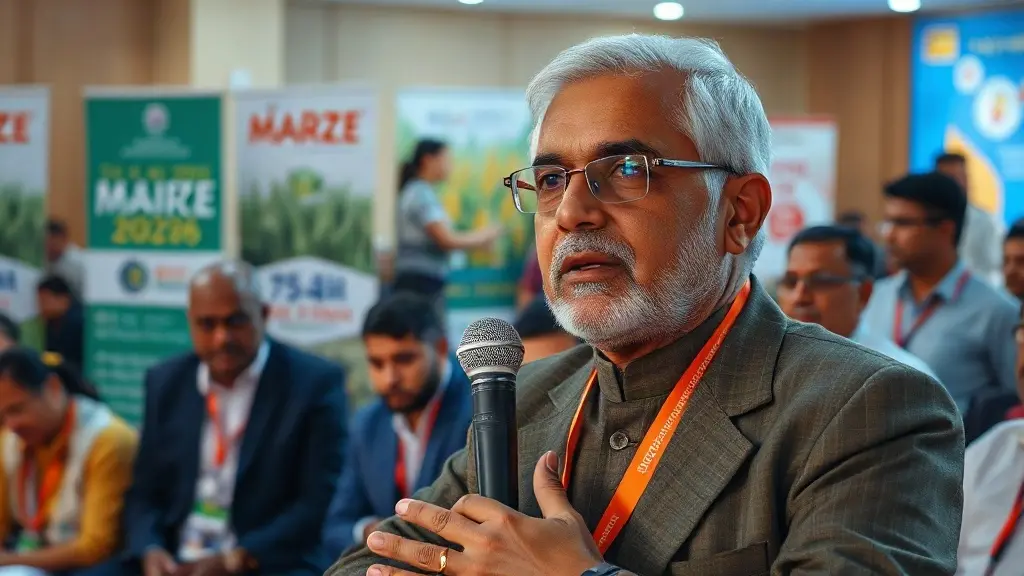
The [1st International Maize](/1st-international-maize-conference-2026-advocates-for-innovative-breeding-strategies) Conference, themed "Maize Revolution for Food, Feed, Fodder, Fuel and Sustainability in the Changing World," commenced at the JD Convention Centre in Hyderabad on November 8, 2026. This pivotal event gathered scientists, policymakers, agricultural institutions, and industry stakeholders to discuss strategies aimed at enhancing maize research, productivity, and value-chain development.
The conference's primary focus was on the need for high-yielding varieties and hybrids, improved nutritional quality, efficient resource utilization, mechanization, and robust seed systems. According to official records reviewed by DotMR, maize production in India has reached approximately 55 million tonnes, with a goal set to increase this figure to 75 million tonnes over the next decade.
Strategic Goals for Maize Production
Dr. M. L. Jat, Secretary of the Department of Agricultural Research and Education (DARE) and Director General of the Indian Council of Agricultural Research (ICAR), addressed the attendees, emphasizing the necessity of a systems-science approach to bridge yield gaps. He stated, "Research and extension must translate into higher farm profitability and improved livelihoods." Dr. Jat highlighted the importance of strategically targeting maize across various seasons and agroecological zones without compromising the production of other essential crops, particularly oilseeds and pulses.
The conference also underscored the expansion of the traditional 4F vision—Food, Feed, Fodder, and Fuel—by placing Farmers at the center of agricultural strategies. Dr. Jat called for a 1.5-fold increase in productivity through technological innovation and improved crop management practices.
Innovations in Breeding and Research
Dr. D. K. Yadav, Deputy Director General (Crop Science) at ICAR, described maize as a model crop for ensuring food, nutritional, and energy security. He noted the significant advancements made in maize research and extension over the past five years, including the development of 329 new maize hybrids. Dr. Yadav advocated for strengthening the All India Coordinated Research Project on Maize (AICRP on Maize) to further enhance breeding for higher yields and improved nutritional quality.
He emphasized the need for collaboration among research institutions, universities, and industry to realize maize's potential as an ethanol feedstock. "We must focus on breeding for resistance to biotic and abiotic stresses, alongside input-use efficiency and mechanization," Dr. Yadav stated.
Farmer-Centric Approaches and Collaboration
Padma Shri Dr. S. Vasal, a renowned maize scientist and World Food Laureate associated with CIMMYT, advocated for simple, cost-effective breeding approaches to accelerate the development of improved varieties and hybrids tailored to farmers' needs. His insights reflect a growing recognition of the importance of aligning research priorities with the evolving demands of [agriculture](/topic/agriculture-msp).
Padma Bhushan Dr. R. S. Paroda, former Secretary of DARE and Chief Guest at the conference, stressed the significance of systematic germplasm conservation and utilization. He called for the adoption of advanced breeding techniques and stronger maize value chains to ensure maize safety and quality for food and feed.
Dr. H. S. Jat, President of the Maize Technologists Association of India (MTAI), welcomed the dignitaries and highlighted maize's strategic importance in India's agricultural transformation. He reiterated the need for stronger collaboration among research institutions, agricultural universities, policymakers, and industry to address emerging challenges in maize production.
Recognition and Future Directions
During the conference, several scientific publications were released, and awards were presented to eminent scientists and researchers in recognition of their contributions to maize research and development. The event underscored the critical role of collaborative, farmer-centric research in bridging yield gaps, improving seed access, strengthening breeding programs, enhancing nutritional quality, and developing sustainable maize value chains.
The conference concluded with a renewed commitment to advancing maize research and productivity, aiming to meet the growing demands for food, feed, fodder, and energy in a changing world. The collective efforts of the agricultural community are expected to play a pivotal role in achieving these ambitious goals over the next decade.